
Solution
Sewer cleaning
You can clean blocked pipes, gullies and manholes even where a large sewer cleaning vehicle cannot reach – in historic centres, pedestrian zones, narrow streets or tunnels.
- PTC
In brief
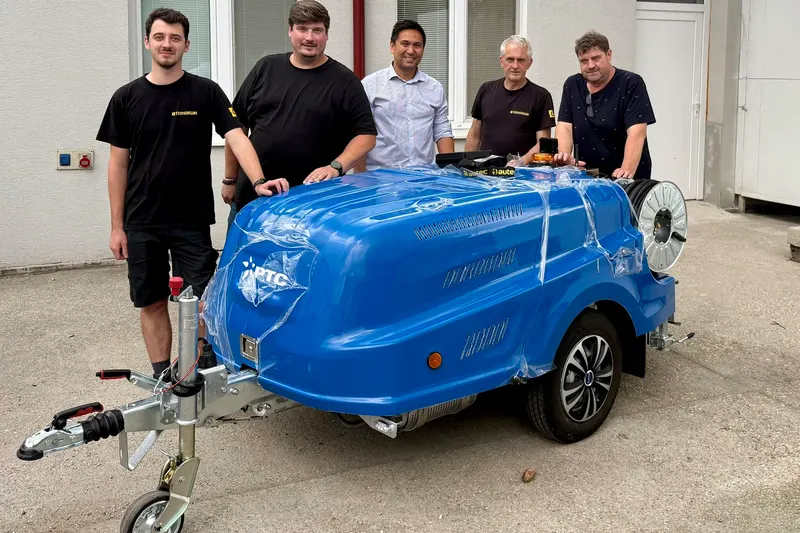
Sewer cleaning is flushing the pipe with a water jet from a cleaning head (nozzle) that pulls itself through the pipe; the loosened sludge is flushed out. TECHNIKUM supplies portable, built-in and trailer-mounted PTC machines.
How it works
How sewer cleaning with water works
The engine-driven high-pressure pump takes water from the tank and feeds it through the hose on the reel to the nozzle in the pipe. The water jet loosens the blockage and cleans the pipe walls.
Select a step or click a part of the diagram – we will show what it does, related terms, questions and products.
- Heat
- Water
- Drive
- Water under high pressure
Description of all parts
- Water
The machine can have one or more water tanks – for work where there is no water source and for a constant flow.
- Water tank
One or more tanks – water for work where there is no water source and for a constant flow. On request, a hydrant can also be connected (UNI 45 / STORZ kit) – on CTR-C and JTR-C trailers and also on WHALE, SALMON and MOSES built-in units.
Modular plastic tanks. For winter, the system is emptied with compressed air – the winter kit is included as standard.
- Water tank
- Drive and pump
The engine drives the high-pressure pump, which generates a high-pressure water jet. The drive is petrol, diesel or electric – depending on the machine.
- Engine
Drives the pump. Depending on the machine, petrol, diesel or electric (also battery or mains powered).
WHALE has a Honda petrol engine, SALMON a Vanguard petrol or Kohler diesel engine, MOSES a water-cooled Yanmar diesel engine. - High-pressure pump
Generates a high-pressure water jet. PTC manufactures portable machines, trailer-mounted machines and vehicle-mounted machines.
WHALE has a pump with a gearbox, SALMON and MOSES positive-displacement pumps made in-house by PTC. The machines clean with water only, without chemicals. - Hot water boiler (HOT WATER KIT, optional)
A high-pressure boiler with a diesel burner that connects to WHALE, SALMON and MOSES machines. Hot water dissolves grease and encrustations where cold water is not enough – and also helps where frost blocks the sewer.
The burner is switched by a flow switch; the boiler has flame monitoring, thermal protection, a safety valve and electronic temperature control. The lower the flow rate, the more the water is heated.
HOT WATER KIT →
- Engine
- Reel with hose
The high-pressure hose is on the reel. The operator feeds it into the pipe and pulls it back – the reel is manual, electric or hydraulic.
- Reel with hose
Winds the high-pressure hose that the operator feeds into the pipe and back.
Manual (WHALE), electric (SALMON) or hydraulic swivelling (MOSES). A hose guide at the edge of the manhole protects the hose from tearing.
- Reel with hose
- Nozzle
The nozzle at the end of the hose guides the water jet in the pipe. The nozzle type is chosen according to the job – rotating, chain, penetrating and others.
- Nozzle
Guides the water jet in the pipe. A round nozzle, for example, has angled rear jets and one front jet.
A larger rear-jet angle gives less pull but a stronger effect on the blockage; a front jet reinforces it. The nozzle should be as close as possible to the pipe diameter.
- Nozzle
- Pipe cleaning
Ideally, work starts at the lowest point of the network and the hose is fed to the highest. It is then slowly reeled back in with the pump running, and the water cleans the pipe.
- Pipe being cleaned
The water pressure loosens the blockage and cleans the pipe walls at the same time.
- Pipe being cleaned
Simplified principle of a jetting machine. The loosened dirt flows away through the pipe; for suction from the manhole, VORTEX suction and combination machines with a tank and vacuum pump are used. We specify equipment, drive and nozzles in our quotation according to the job.
Source: PTC – article on sewer cleaning machines (machine configuration, cleaning procedure) and machine data sheets (ptcitaliana.com).
What we solve
Blocked pipes, gullies and manholes in historic centres, pedestrian zones, narrow streets or tunnels – and emergency call-outs where time is critical.
Who it is for
Water utilities and network operators, municipalities and municipal property management, sewer and cleaning companies, industrial operations.
Technologies
- Portable units
- Units built into vans
- Road-approved trailers
- Stage V engines
What we do for you
- Machine selection by pipe diameter and output
- Sales
- Service in Trnava
- PTC spare parts
Products for this field
- PTC sewer cleaning machines15 models
Contact a technician
Peter Radošovský
FALCH and PTC Manager – sales and spare parts
Patrik Dusík
FALCH and PTC Service Technician – service and equipment hire
- Phone – Patrik Dusík: +421 910 431 267
- E-mail – Patrik Dusík: dusik@technikum.sk
- Speaks: English, Slovak, Czech
In pictures
Frequently asked questions
Portable, built-in or trailer – which to choose?
Portable units (electric or petrol engine) for smaller, quick jobs, units built into vans and lorries for regular work, and road-approved trailers for higher output. The choice depends on pipe diameter and output.
Are PTC machines suitable for historic centres?
PTC machines are designed for places that a large sewer cleaning vehicle cannot reach – historic centres, pedestrian zones, narrow streets, tunnels; the diesel units comply with the Stage V standard.
Where are PTC machines serviced?
We provide PTC service and spare parts at the Industrial Coating Centre (showroom and test centre in Trnava). Service within 48 hours means a service call-out within 48 hours or – if the machine is with us – a repair within 48 hours, provided spare parts are available. Patrik Dusík is responsible for PTC machine service and Peter Radošovský for parts – contact details are further down this page.
What driving licence is needed for a PTC trailer?
For trailers up to 750 kg (for example PTC CTR-C), a category B licence is sufficient. For heavier models it depends on the trailer weight – we will tell you when quoting. See also unit types.
Have a different question? Write to us – a technician will answer. Send an enquiry
Technical terms are explained in the glossary.
Related solutions
High-pressure cleaning
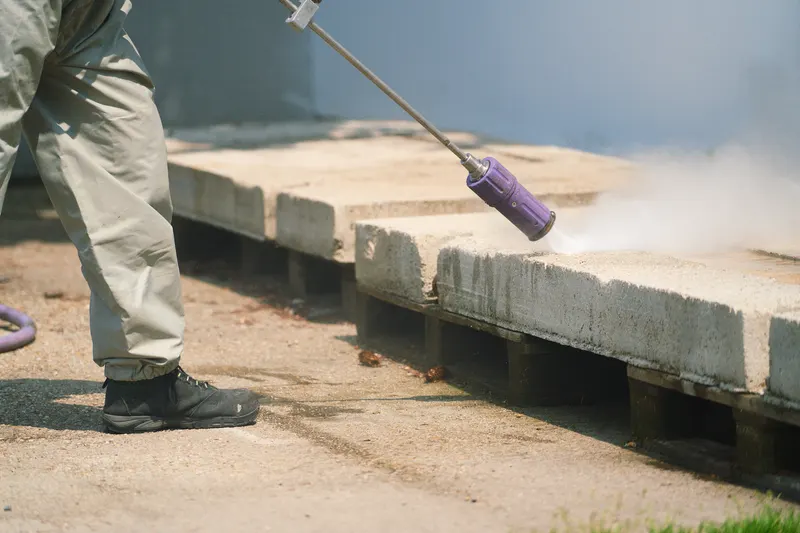
FALCH machines up to 3,000 bar – sales, service and parts. Hire of machines up to 2,500 bar at 2500bar.sk.
- FALCH
High-pressure hoses
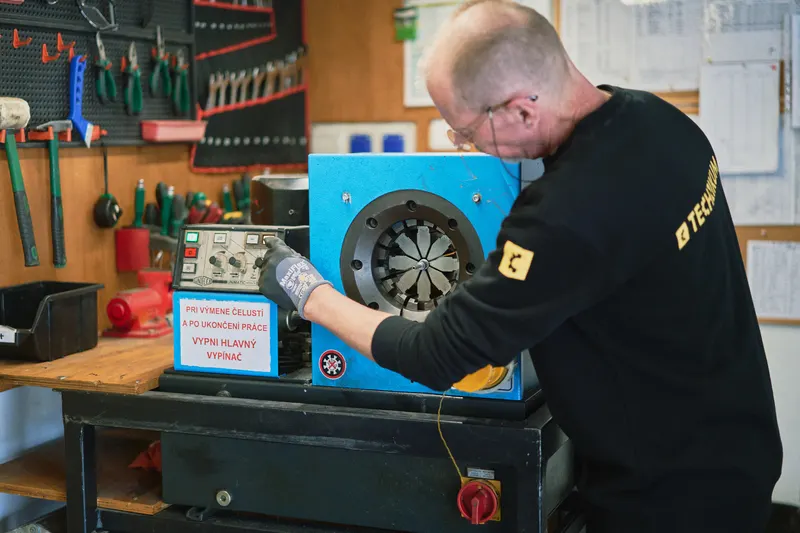
Custom hose manufacturing and crimping up to 1,000 bar – in the workshop and at your site.