
Solution
Solvent recycling
Used solvent returns to production – you buy less new solvent and hand over less as hazardous waste.
- IST
In brief
Solvent recycling is distillation: contaminated solvent is heated above its boiling point, the vapours condense in a condenser into clean solvent, and a dried residue for disposal remains in the vessel. TECHNIKUM supplies IST distillation units as the authorised IST distributor for Slovakia and the Czech Republic.
How it works
How solvent distillation works
The contaminated solvent is heated in the boiler, its volatile fraction evaporates, turns back into a liquid in the condenser and flows out as clean solvent. The contaminants remain in the boiler as residue.
Select a step or click a part of the diagram – we will show what it does, related terms, questions and products.
- Contaminated liquid
- Negative pressure (vacuum)
- Heat
- Residue for disposal
- Vapour
- Cooling
- Clean liquid
Description of all parts
- Filling
The contaminated solvent is filled into the boiler – depending on the machine, manually, with a filling kit or automatically from a storage tank.
- Contaminated solvent
Solvent contaminated with paints, resins and the like – for example from cleaning spray guns and containers.
- Contaminated solvent
- Heating and evaporation
Thermal oil transfers heat to the boiler. The volatile fraction of the solvent evaporates; the less volatile contaminants remain in the boiler. Some series operate under vacuum.
- Vacuum (some series)
In some series (IST 90, IST 202, ECO PLUS, ROTO PLUS, HR), a vacuum pump lowers the boiling point of the solvent. IST uses a liquid-ring vacuum pump.
A lower boiling point means less thermal stress – suitable for high-boiling and heat-sensitive solvents. For nitrocellulose paints, IST recommends vacuum distillation. - Distillation unit boiler
A sealed boiler in which the solvent evaporates and the contaminants remain. Some series have an agitator with scrapers that keeps the boiler walls clean.
Distillation only changes the physical state – the chemical properties of the solvent are retained, so it can be distilled repeatedly. IST has replaced the PTFE coating with a surface treatment of the boiler that is similarly non-stick and more wear-resistant.
How solvent recycling by distillation works → - Thermal oil heating
Heat is transferred to the boiler by thermal (diathermic) oil – not by a direct flame or a heating coil in the solvent.
According to IST, oil heating is more efficient than steam or hot water. Smaller machines use static oil; the HR series has a modulating heater with an oil circulation pump.
- Vacuum (some series)
- Condensation
The vapours pass into the condenser, which removes their heat – the solvent returns to liquid form. The condenser is cooled by air or water.
- Condenser
Removes heat from the vapour so that the solvent turns back into a liquid.
The condenser material must be compatible with the solvent being distilled. - Air or water cooling
An air-cooled condenser depends on the room temperature and ventilation; a water-cooled one allows more stable conditions.
- Condenser
- Clean solvent
The condensed solvent is collected in a container. Whether it is suitable for reuse depends on its composition and on the process in which it is to be used.
- Clean solvent
The distillate is collected in a container and can be reused, for example for cleaning.
Less new solvent and less waste – and less dependence on suppliers.
- Clean solvent
- Residue
At the end of the cycle, the concentrated residue is removed from the boiler – depending on the machine, by tilting the boiler into a bag, via a valve or automatically.
- Residue for disposal
The concentrated residue (sludge) from the boiler is disposed of as waste. Its volume is much smaller than that of the original contaminated solvent.
The residue consists of resins, polymers, metals and other non-volatile substances; depending on its composition, it is hazardous waste. It is emptied by tilting the boiler into a bag (IST C, 32–62), via a valve (IST 90, 202) or automatically (HR).
- Residue for disposal
Simplified principle, not the layout of a specific model. The filling, emptying and cooling method, and whether the machine operates under vacuum, vary by series – we specify them in our quotation.
Source: IST – description of the distillation process in 5 steps and the distillation unit pages (ist.it).
What we solve
Solvent for flushing spray guns and cleaning parts is bought again and again, and used solvent is expensive to dispose of as hazardous waste.
Who it is for
Paint shops, the automotive industry and all operations that generate contaminated solvent – from a small workshop to large-scale production.
TECHNIKUM is the authorised distributor of IST Italia Sistemi Tecnologici S.p.A. products in Slovakia and the Czech Republic. We have been working with them for many years and can confirm their professionalism, technical knowledge and commitment to customer service.
Massimiliano MingacciGeneral Sales Manager, I.S.T. Italia Sistemi Tecnologici S.p.A.
Technologies
- Solvent distillation
- Vacuum distillation
- Parts washing
- Cleaning of drums and IBC containers
What we do for you
- Trial with your waste before purchase
- Sizing of the unit
- Delivery, commissioning and training
- Service and consumables
Products for this field
- IST distillation units8 models
- Washing of parts, drums and IBCs – IST14 models
- IST vacuum evaporators2 models
Contact a technician
Lukáš Rybár
IST Manager – solvent recycling
- Phone – Lukáš Rybár: +421 948 855 000
- E-mail – Lukáš Rybár: rybar@technikum.sk
- Lukáš on LinkedIn
- Speaks: English, Slovak, Czech
Patrik Pocisk
Sales and Marketing Director
- Phone – Patrik Pocisk: +421 905 855 000
- E-mail – Patrik Pocisk: pocisk@technikum.sk
- Patrik on LinkedIn
- Speaks: English, Slovak, Czech
Videos from our channel
IST – recycling of contaminated solventsVideo from our YouTube channel – it only loads when you click. Watch on YouTube
Frequently asked questions
How does solvent recycling work?
By distillation: contaminated solvent is heated above its boiling point, the vapours condense in a condenser into clean solvent ready for reuse, and a dried residue for disposal remains in the vessel.
Which solvents can be recycled?
For example acetone, thinners, alcohols (isopropyl alcohol), ketones, esters (ethyl acetate), aromatics (toluene, xylene) and others. We will assess your specific solvent.
What is left after distillation?
A dried residue (pigments, resins), which is disposed of as waste – in a much smaller volume than the original liquid solvent.
Do you also clean drums, IBC containers and parts?
IST also makes parts washers (EASY WASH) and automatic drum and IBC cleaning (BW BIN, TW, TW-D) – see Washing of parts, drums and IBCs.
What size of distillation unit do I need?
It depends on how much solvent you use per day (the manufacturer states the typical use in l / 24 h), which solvent it is and whether the unit will be in an ATEX environment. Send us this information and we will propose a model from the IST distillation units category.
More questions (2)
What does the price of an IST distillation unit depend on?
On the size of the unit – how much solvent it processes per day (typical use in l / 24 h) –, the type of solvent, an ATEX environment, the equipment (for example vacuum distillation) and on delivery, commissioning and training. We will send the exact price in a quotation after your enquiry.
Can waste water also be treated, for example from waterborne paints?
Waste water can be treated with an IST vacuum evaporator: the water evaporates at low temperature and is returned as distillate, while the contaminants remain in the concentrate. See IST vacuum evaporators.
Have a different question? Write to us – a technician will answer. Send an enquiry
Technical terms are explained in the glossary.
Related solutions
Industrial coating
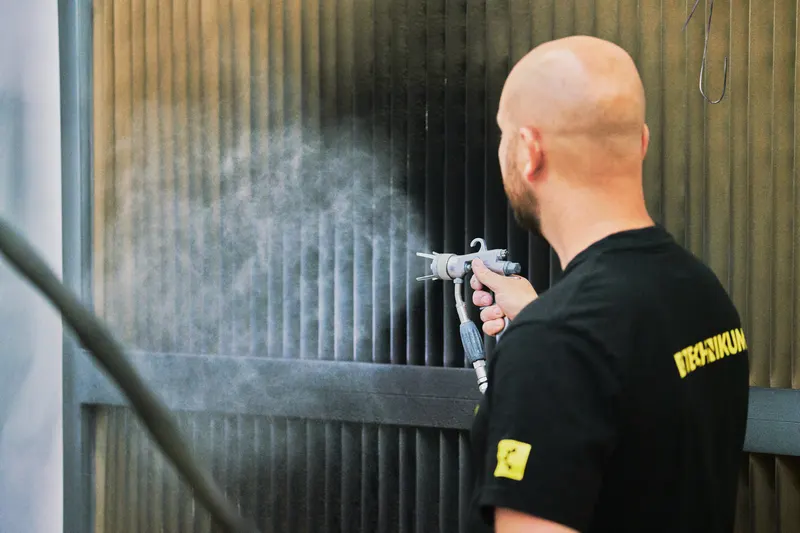
WAGNER and WALTHER PILOT spray pumps, spray guns and 2K systems – from a manual workstation to a coating line.
- WAGNER
- WALTHER PILOT
Robotic painting
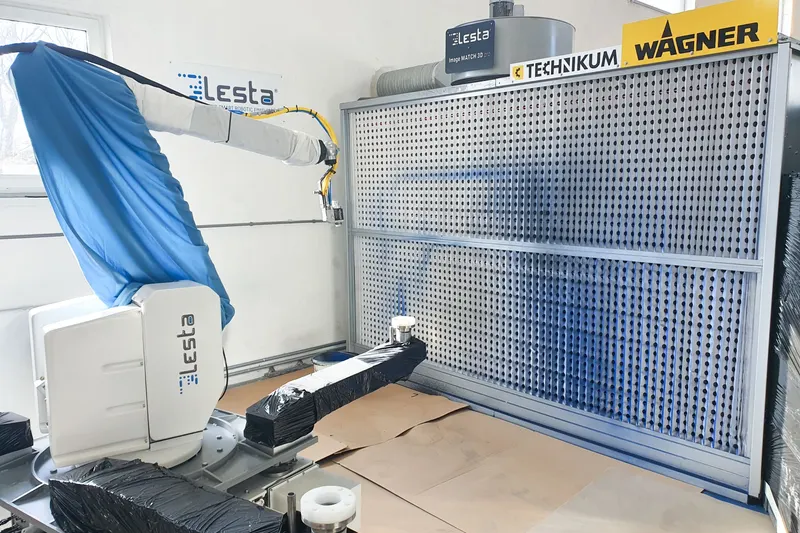
LESTA painting robots that learn the movement from the painter – without programming, also for small and medium batches.
- LESTA