
LESTA
LESTA LEBOT C
LESTA LEBOT C – Cartesian painting robot (gantry) for large parts with a smaller footprint than an anthropomorphic robot; typically windows and frames up to 5 × 3 m.
Who it is for: windows and frames made of wood and metal, doors and profiles, large parts, lines with several stations
- 55-axis cartesian robot
- ±3 mmRepeatability
- 4 kgWrist payload
Enquire about this productSolution: Robotic painting
The technician for your field will contact you as soon as possible. Prices are provided in our quotation.
Why LESTA LEBOT C
- Large parts in a small areaThe gantry design paints large parts with a smaller footprint than an anthropomorphic robot.
- Automatic pathEasyPROG generates the spray gun path from the profile – no manual programming is needed when the window or profile type changes.
- No precise part positioningImage MATCH 2D detects the position of the part using machine vision.
- Long paths, same accuracyVery long travel paths with the same accuracy along the entire rail, also for multiple stations.
- ATEX versionAlso available in an ATEX version for flammable paints and powders.
LEBOT C is a Cartesian painting robot in the form of a gantry whose length, width and depth are adapted to the part. The carriage is moved by a chain drive that gives the structure rigidity and accuracy; the wrist moves on a linear belt guide for high speed in repeated cycles. A typical application is painting windows and frame profiles made of wood or metal, often with the Image MATCH 2D accessory, which detects the position of the part using machine vision, and with EasyPROG programming, which generates the spray gun path from the profile automatically. Thanks to the gantry, it can have very long travel paths with the same accuracy, also for lines with several stations. The robot can be integrated into lines for liquid and powder coatings and connected to RECIPE MANAGER and PRODUCTION MANAGER.
Source of text: manufacturer’s page
Technical data
- 5-axis cartesian robot
- 5
- Protection class
- ATEX zone 2/22, cat. 3G
- Wrist payload
- 4 kg
- Repeatability
- ±3 mm
- Full speed
- 700 mm/s
- Power supply
- 3x400 VAC
- Programming
- Offline, 2D and 3D vision systems
- can paint windows up to 5 meters wide and 3 meters high
- 5 m wide, 3 m high
Data are taken from manufacturer documentation. We will verify them for your application before you order. Request a technical data sheet
Suitable for
- wood painting
- other materials and adhesive spraying
- plastics painting
- fibreglass, gelcoat and topcoat
Accessories for this equipment
According to manufacturer documentation. We will select the exact version (bore, pressure, length) with you based on the equipment and material.
LESTA automation and software
How it works
How a painting robot learns a new part
A LESTA robot learns the spray gun path in one of three ways: the painter performs it once with the robot arm, coats it once with a spray gun tracked by cameras, or a programmer prepares it in the computer on a 3D model of the part. The robot then repeats the program by itself.
Offline programming in PAINT STUDIO – for example LEBOT DG, I A6, C and WP: paths are created in the computer on a 3D model while the robot can keep producing.
Select a step or click a part of the diagram – we will show what it does, related terms, questions and products.
- Motion and recording
- Control and signal
Description of all parts
- Teaching mode
The painter switches on self-learning mode. The robot disengages its motors so that the arm can be guided freely by hand; its weight is supported by compressed air.
- Hand guiding
The painter guides the arm with the spray gun and performs the work cycle once, just as if coating the part manually.
- Hand guiding
The painter performs the work cycle once with the robot arm – making use of the painter's coating experience.
During teaching the motors are disengaged and the arm is supported by compressed air, so it is easy to guide. Low arm friction directly affects the quality and repeatability of the result. On a carriage, the robot "follows" the painter during recording (Follow Me). - GESTURE camera and spray gun with markers
Below the spray gun there is a handle with passive markers. The painter coats the first part manually and cameras record the 3D position of the markers – without the robot arm.
Recording does not depend on the robot arm, so it is also suitable for robots whose motors remain engaged – for example LEBOT DG. For particularly demanding applications, the manufacturer still recommends the self-learning LEBOT MV A6.
LESTA LEBOT DG → - PAINT STUDIO offline programming
A 3D model of the part, or of the entire booth, is loaded into the computer, spray gun paths are created and a simulation shows the robot's reach and the cycle time.
Meanwhile the robot can keep producing – programming does not stop the line. Key points of the path can also be recorded by physically moving the robot.
LESTA PAINT STUDIO →
- Hand guiding
- Motion recording
The robot records every movement in real time – on a carriage, including the travel along the rail.
- Path recording
The movement of the spray gun is saved as a path.
- Path recording
- Part program
The recording is saved as the part program. There is no need to write code or program paths – simply start the program.
- Part program
The path is saved as a program for the given part – without writing code. Programs can be called up by PRODUCTION MANAGER using a barcode or RFID tag.
LESTA automation and software →
LESTA PRODUCTION MANAGER →
- Part program
- Automatic coating
The robot repeats the program automatically, cycle after cycle.
- Painting robot: LESTA LEBOT C
LESTA painting robot. Only the LEBOT MV series is taught by hand guiding; LEBOT DG is taught with the GESTURE camera or in PAINT STUDIO; LEBOT I A6, C and WP are programmed offline. - Automatic coating of parts
The robot repeats the program automatically, cycle after cycle. For a new part, a new program is recorded.
- Painting robot: LESTA LEBOT C
Simplified teaching principle. LEBOT C can also generate the path itself from a scanner (EasyPROG); LEBOT PICCHIO and WP are set up by entering points. We will design the teaching method and the connection to the spray gun, pump and conveyor to suit your production.
Source: LESTA – pages for the LEBOT MV A6, MV A5, DG (Italian website), I A6, C and WP robots, and the GESTURE and PAINT STUDIO accessories (lesta.it).
Similar models – LESTA painting robots
LESTA
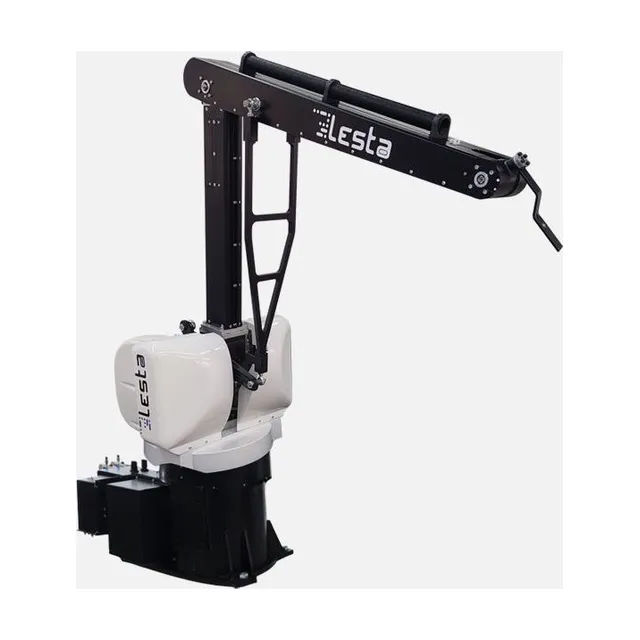
LESTA LEBOT MV A5
LESTA LEBOT MV A5 – 5-axis painting robot with teach-by-demonstration: the operator demonstrates the spraying once and the robot repeats it; ATEX zone 2/22, payload 4 kg.
4 kgWrist payload
LESTA
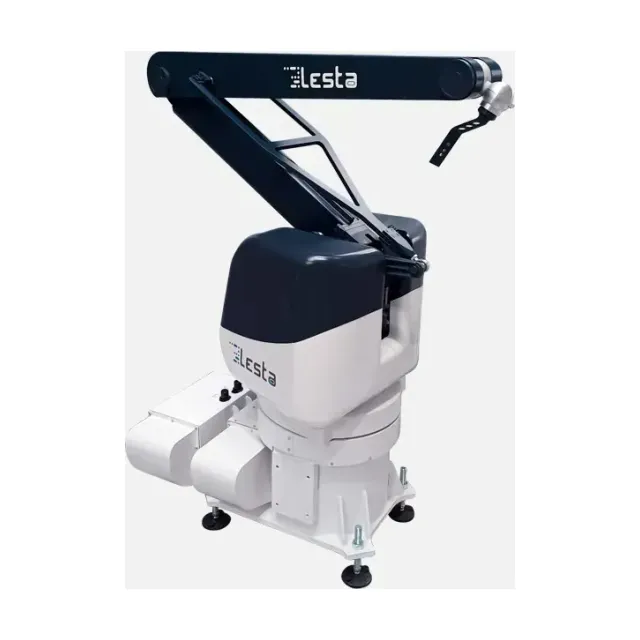
LESTA LEBOT MV A6
LESTA LEBOT MV A6 – 6-axis painting robot with teach-by-demonstration and an easily guided aluminium arm; according to the manufacturer, the most widely used model in the LESTA range.
4 kgWrist payload
LESTA
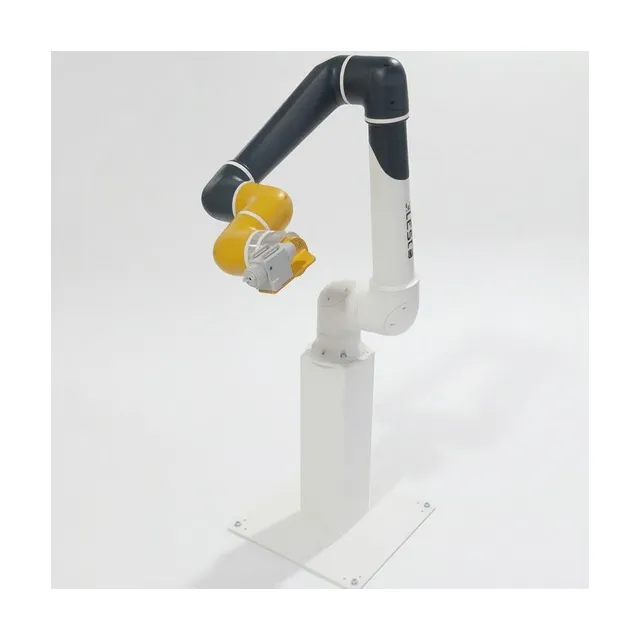
LESTA LEBOT DG
LESTA LEBOT DG – compact 6-axis anthropomorphic painting robot with motors always engaged, programmed offline or via LESTA GESTURE; payload 5 – 20 kg.
5 – 20 kgWrist capacity
LESTA
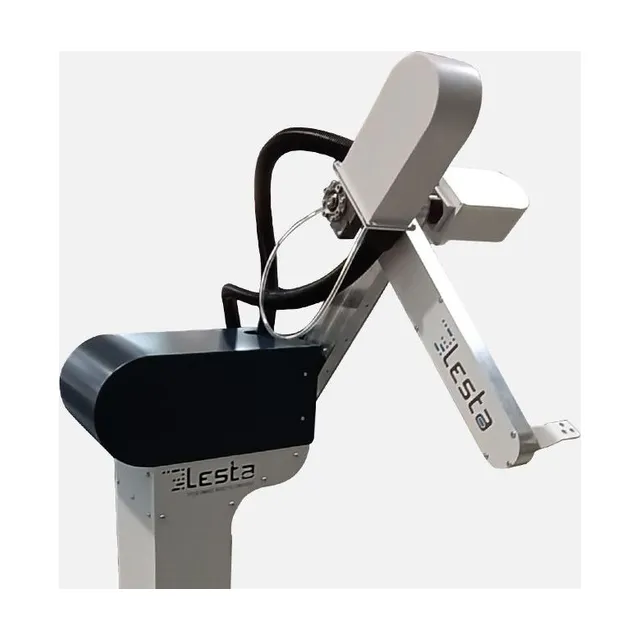
LESTA LEBOT WP
LESTA LEBOT WP – small 3-axis robot without teach-by-demonstration for repeating painting paths or as a spray gun positioner; 2 kg, 72 kg, ATEX zone 2/22.
2 kgWrist payload
Frequently asked questions
How many axes and what payload does LESTA LEBOT C have?
According to the manufacturer's technical data for LESTA LEBOT C: number of axes 5; wrist payload 4 kg.
What accuracy and speed does LESTA LEBOT C offer?
According to the manufacturer's technical data for LESTA LEBOT C: repeatability ±3 mm; maximum speed 700 mm/s.
What power supply and protection rating does LESTA LEBOT C have?
According to the manufacturer's technical data for LESTA LEBOT C: power supply 3×400 VAC; protection ATEX zone 2/22, cat. 3G.
How is LESTA LEBOT C programmed?
According to the manufacturer's technical data for LESTA LEBOT C: programming offline, 2D and 3D camera systems.
Have a different question? Write to us – a technician will answer. Send an enquiry
Technical terms are explained in the glossary.