
WAGNER

WAGNER spray booths
Booths for wet painting. Type 700 and type 90W with the manufacturer's technical data.
About WAGNER – Certified Partner for the Czech Republic and Slovakia
Models (2)
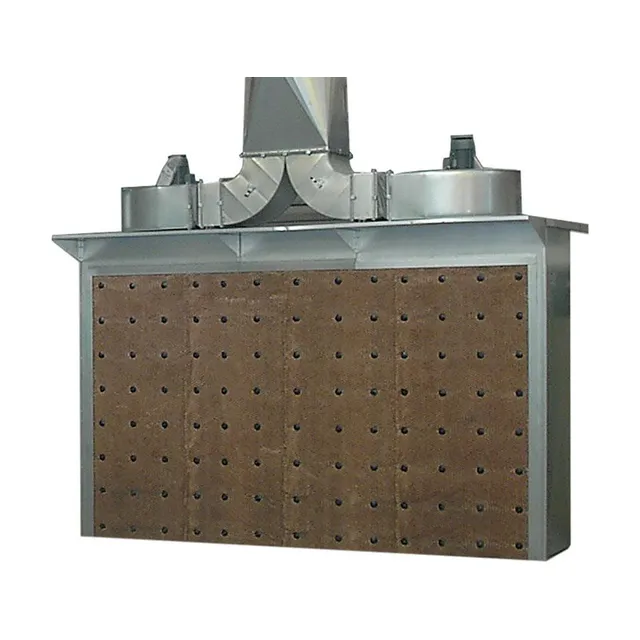
Spray booth type 90W
Extendable spray booth WAGNER type 90W with multi-layer filtration, ATEX.
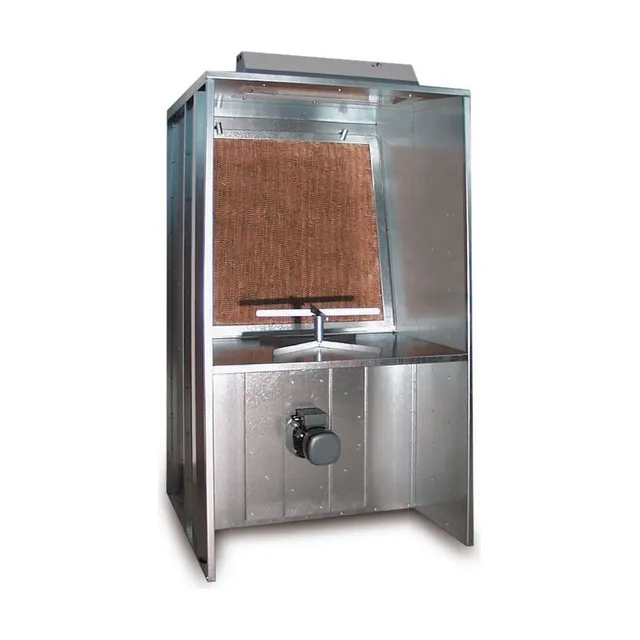
Spray booth type 700
Modular spray booth WAGNER type 700 with dry filtration – multi-layer filters, quick filter change, ATEX.
Also searched as: spray booth, spray booths, booths, painting booth
How it works
How a spray booth with extraction works
The fan draws air from the working area. Overspray – paint particles that did not land on the part – is captured by filters or water, and the cleaned air is discharged outside.
Select a step or click a part of the diagram – we will show what it does, related terms, questions and products.
- Extracted air
Description of all parts
- Supply air
Air flows into the booth – on larger installations from a dedicated supply air unit that filters the air and heats it as required.
- Supply air
On larger installations, the supply air unit filters outside air, heats it as required and feeds it into the booth at a slight overpressure. On smaller booths, the air comes from the workshop.
The supply air must replace the extracted air, otherwise negative pressure and draughts occur. In the cold season, the supply air is heated.
- Supply air
- Working area
Spraying produces overspray. The air flow carries it away from the painter and the part.
- Booth working area
This is where the part is painted. The air flow carries overspray and vapours away from the painter.
Before commissioning, an explosion protection inspection is carried out, followed by regular inspections.
- Booth working area
- Overspray separation
Dry separation: multi-layer filter mats capture the overspray. Wet separation: the particles are bound in water, producing sludge.
- Dry filters
Multi-layer filter mats capture the overspray. On the 700/800 booths, for example, they are made of recycled paper in a hinged frame.
Advantages: lower investment, simpler disposal, no process water. Disadvantages: fire risk with self-igniting paints, downtime for filter changes and suction that varies as the filters clog. - Wet separation
In wet booths, the particles are bound in the scrubbing liquid, producing paint sludge.
Suitable for sticky and flammable paints, with a lower fire risk and constant performance. Disadvantages: humidity, corrosion, sludge disposal and chemicals.
- Dry filters
- Fan
A built-in fan creates the air flow through the booth.
- Fan
A built-in fan draws air through the filters.
- Fan
- Exhaust air
The cleaned air leaves through the exhaust air connection.
- Exhaust air
Exhaust air connection – on some booths it can be connected on the left or the right.
- Exhaust air
Simplified principle. We design the booth size, extracted air volume, type of separation and connection to the ventilation system according to the parts and material.
Source: WALTHER PILOT – WaltherWiki, extraction systems and supply air; type 700/800 booth pages (walther-pilot.de) and WAGNER Type 700 (wagner-group.com).