
WALTHER PILOT
WALTHER PILOT spray guns
Manual and automatic guns for paints, adhesives and release agents.
Send an enquirySolution: Industrial coatingCompare models in the table
Models (24)
Sorted by “Pressure”, lowest value first.
WA 81
WALTHER PILOT WA 81 automatic spray gun for internal coating of pipes – disc nozzle and 360° all-round spray.
6 barPressure
- Weight [net/gross]
- 112 g
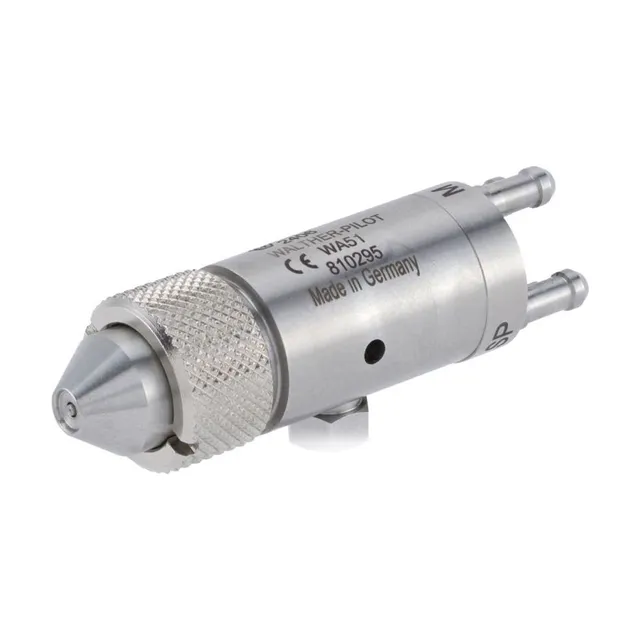
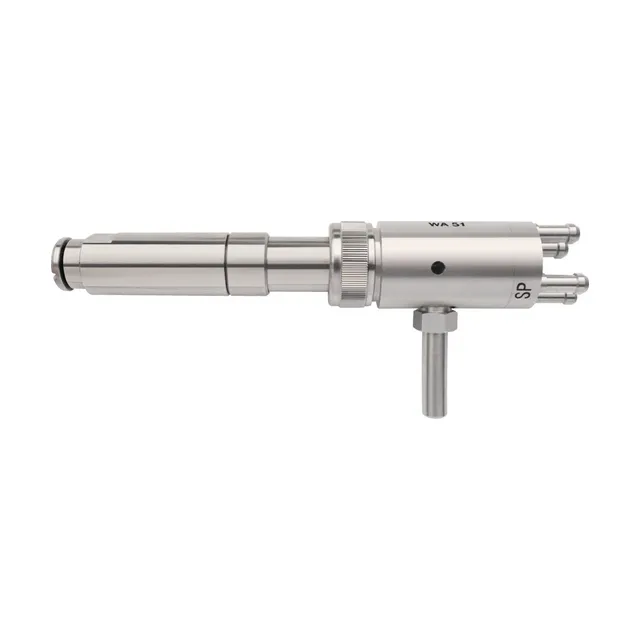
WA51
WALTHER PILOT WA51 miniature precision atomiser, externally controlled, with optional needle stroke limitation – for confined installation spaces.
6 barPressure
- Weight [net/gross]
- 112 g
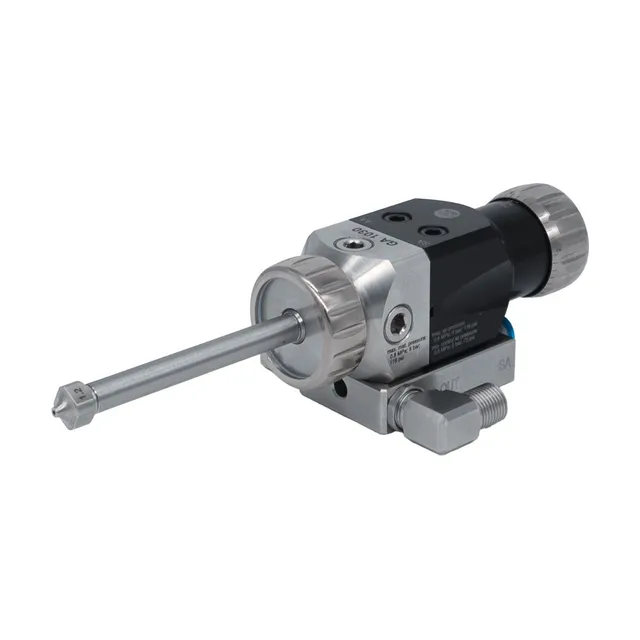
GA 1030 Extrusion
GA 1030 Extrusion automatic spray gun with 100 mm extension for fast and precise application of beads and dots of high-viscosity materials.
8 barPressure
- Weight [net/gross]
- 643 g
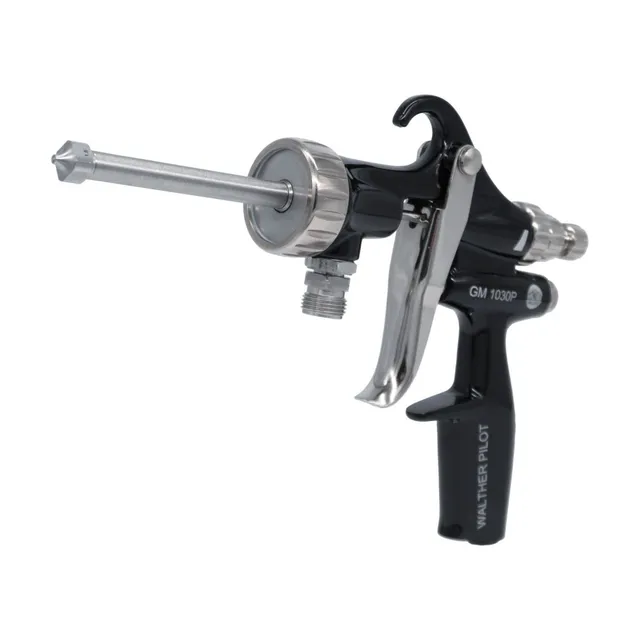
GM 1030 Extrusion
GM 1030 Extrusion manual spray gun with 100 mm extension for fast and precise application of beads and dots of high-viscosity materials.
8 barPressure
- Weight [net/gross]
- 482 g
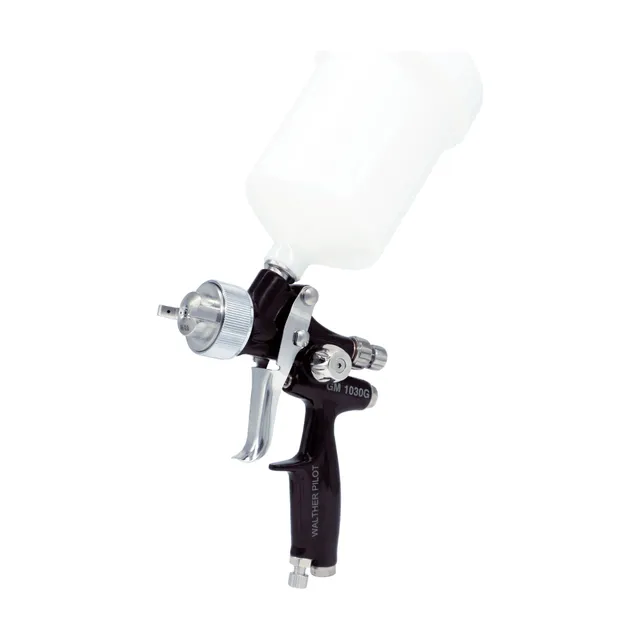
GM 1030G AR
GM 1030G AR Airspray manual spray gun with cup for abrasive media – ceramics, enamel, metallic paints and glazes.
8 barPressure
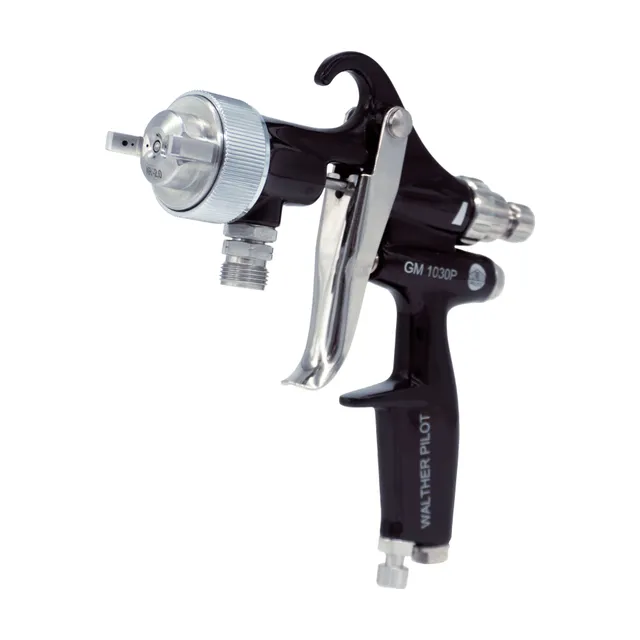
GM 1030P AR
GM 1030P AR Airspray manual spray gun with material feed for abrasive media – ceramics, enamel, metallic paints and glazes.
8 barPressure
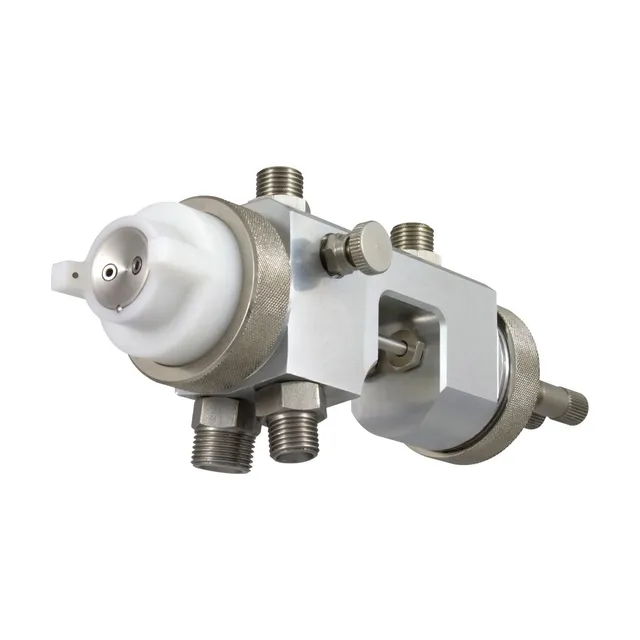
Misch-N Automatik
WALTHER PILOT Misch-N Automatik two-component automatic spray gun for silver and copper reaction solutions – glass, wood, ceramics, plastics.
8 barPressure
- Weight [net/gross]
- 795 g
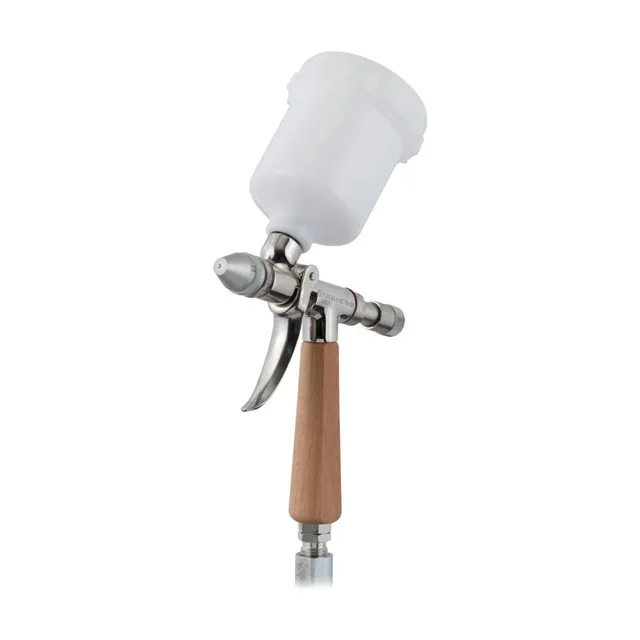
Pilot I
Compact WALTHER PILOT Pilot I decorating spray gun for fine, precise spraying with an airbrush-like pattern – with a wooden handle in retro design.
8 barPressure
- Weight
- 349 g
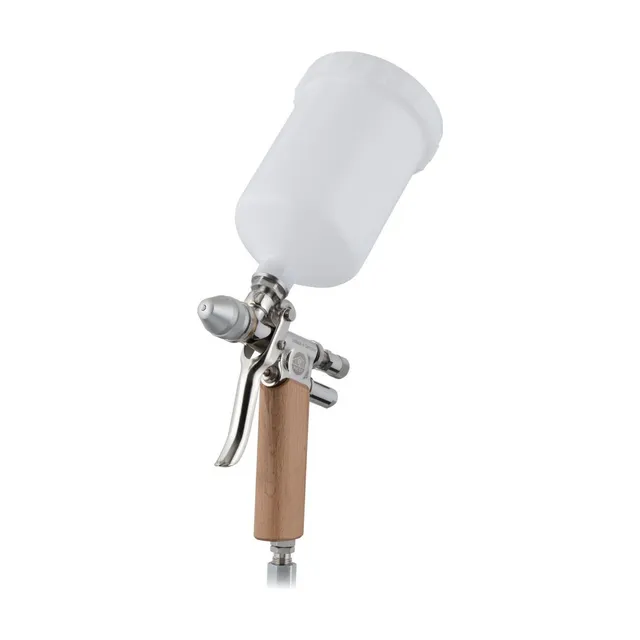
Pilot II
WALTHER PILOT Pilot II decorating spray gun with wooden handle and 600 ml cup – for design painting, release agents and coatings (e.g. in foundries).
8 barPressure
- Weight [net/gross]
- 663 g
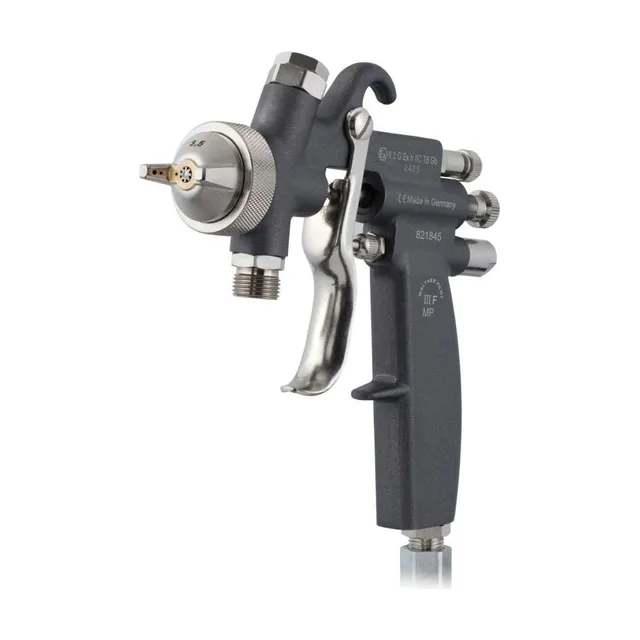
Pilot III-F FA
Universal WALTHER PILOT Pilot III-F FA manual spray gun for common paints and adhesives with an easy-to-clean PTFE-coated body, with material feed (hose).
8 barPressure
- Weight [net/gross]
- 584 g
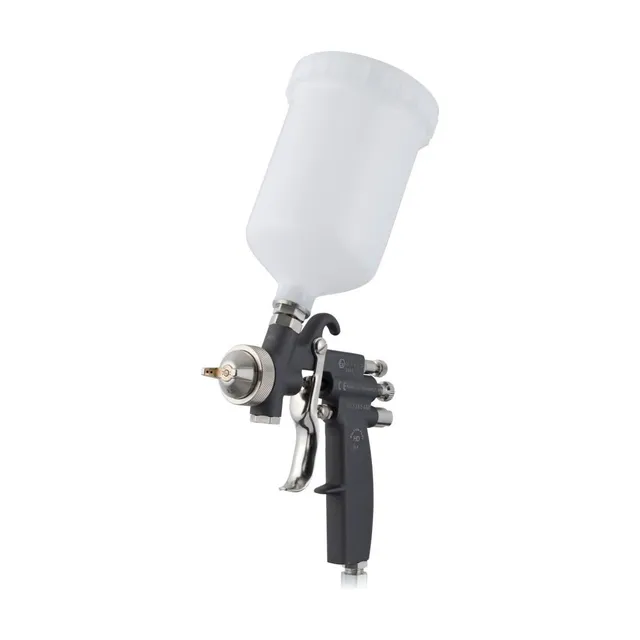
Pilot III-F FB
Universal WALTHER PILOT Pilot III-F FB manual spray gun for common paints and adhesives with an easy-to-clean PTFE-coated body, with cup.
8 barPressure
- Weight [net / gross]
- 779 g
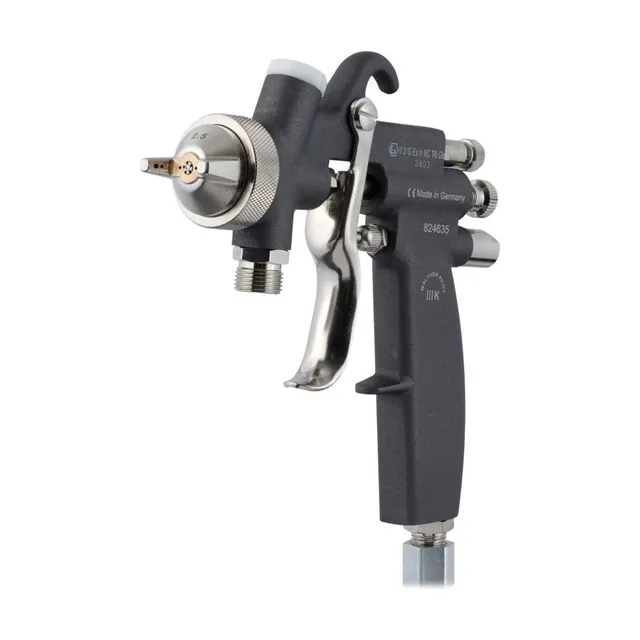
Pilot III-K FA
WALTHER PILOT Pilot III-K FA manual spray gun for solvent-based adhesives – proven in upholstery and automotive lamination, with material feed (hose).
8 barPressure
- Weight [net/gross]
- 584 g
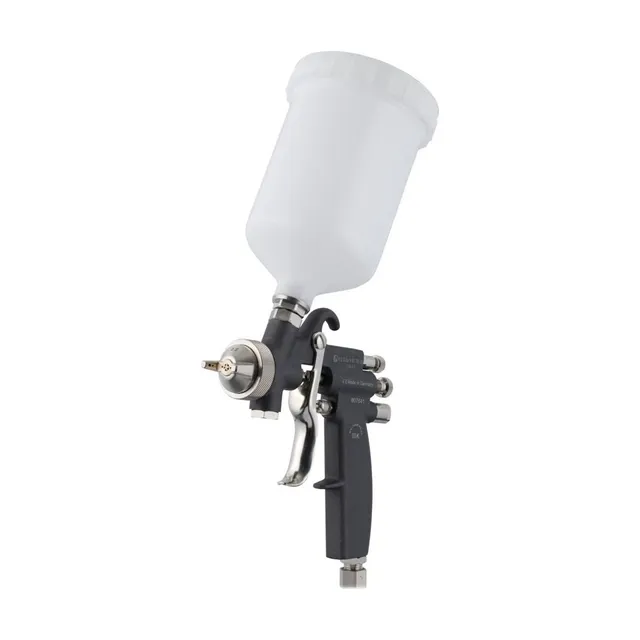
Pilot III-K FB
WALTHER PILOT Pilot III-K FB manual spray gun for solvent-based adhesives – proven in upholstery and automotive lamination, with cup.
8 barPressure
- Weight [net/gross]
- 779 g
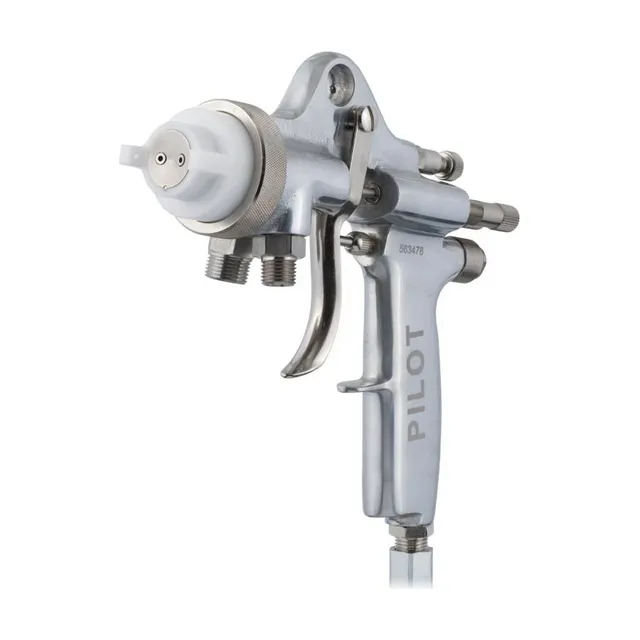
Pilot Misch-N
WALTHER PILOT Pilot Misch-N two-component spray gun for mirror coating – precise application of silver and copper reaction solutions in a 1 : 1 ratio.
8 barPressure
- Weight [net/gross]
- 848 g
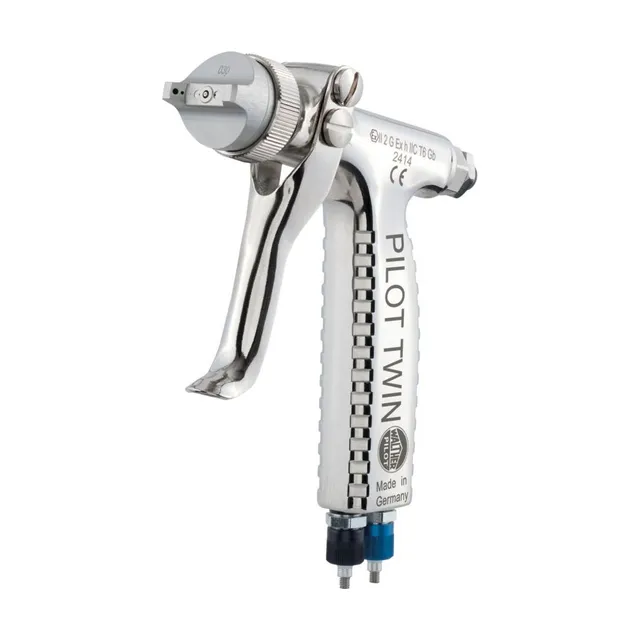
Pilot Twin
Compact WALTHER PILOT Pilot Twin spray gun for release agents and low-viscosity materials – HVLP, high transfer efficiency, lockable settings.
8 barPressure
- Weight [net]
- 227g
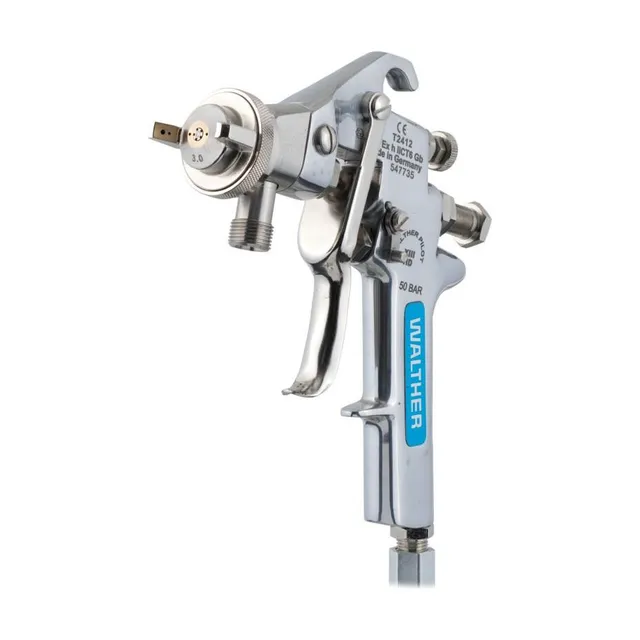
Pilot XIII FA
Robust WALTHER PILOT Pilot XIII FA manual spray gun for heavy-duty use – paints and aggressive media, with cup, feed, circulation or up to 50 bar.
8 barPressure
- Weight [net/gross]
- 715 g
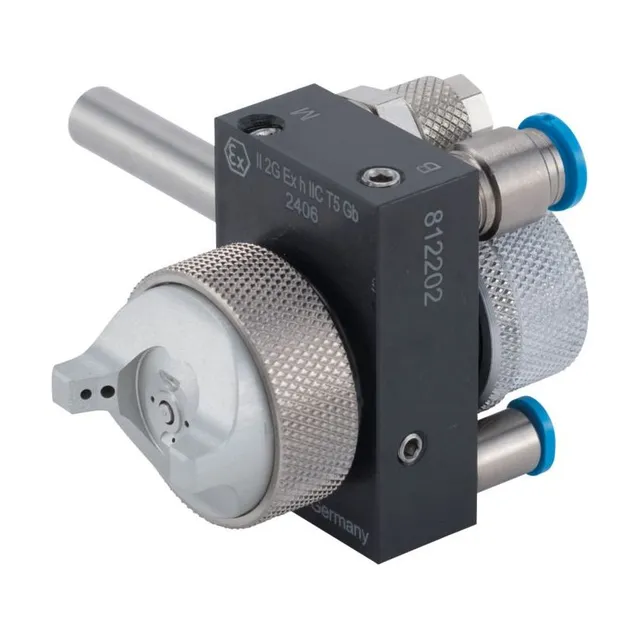
WA 100
Externally controlled WALTHER PILOT WA 100 automatic spray gun for release agents, low-viscosity solvent-based adhesives and paints.
8 barPressure
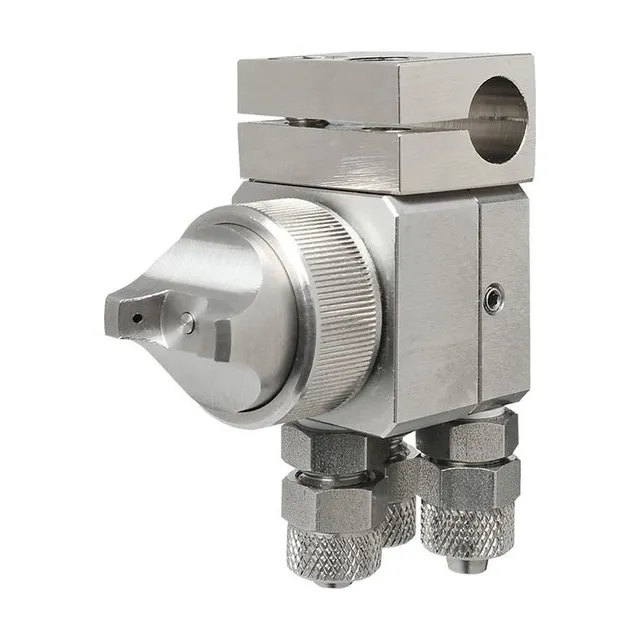
WA 110
The most compact WALTHER PILOT WA 110 automatic spray gun, externally controlled, with robot holder – release agents, oils and fragrances.
8 barPressure
- Weight [net/gross]
- 197.5 g
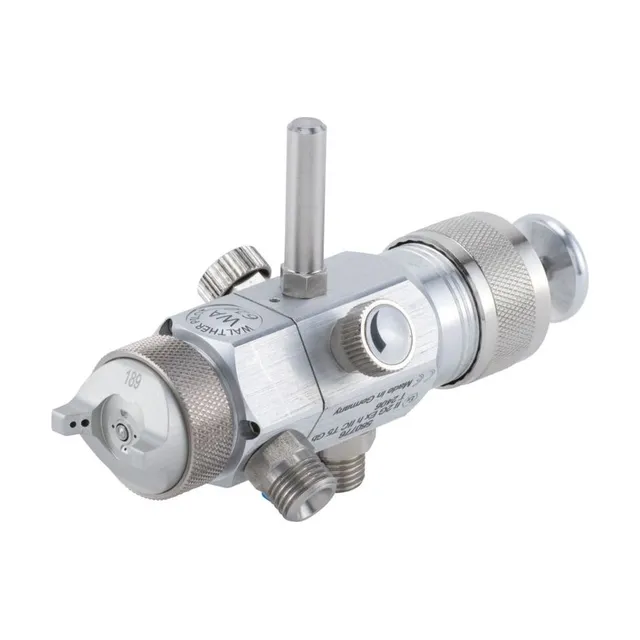
WA600
Compact internally controlled WALTHER PILOT WA600 automatic spray gun for robots – precise quantity control, release agents, adhesives and paints.
8 barPressure
- Weight [net/gross]
- 353 g
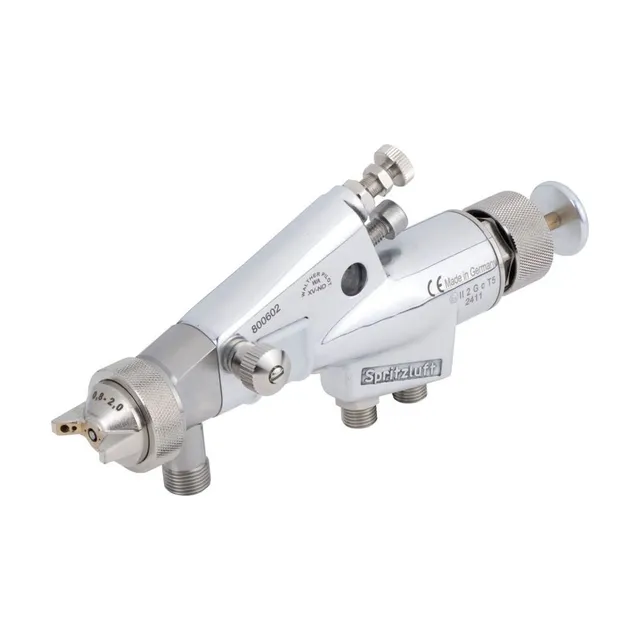
WAXV
Robust WALTHER PILOT WA XV automatic spray gun for heavy-duty use – paints, aggressive media and high-solids adhesives, circulation also available.
10 barPressure
- Weight [net / gross]
- 973 g
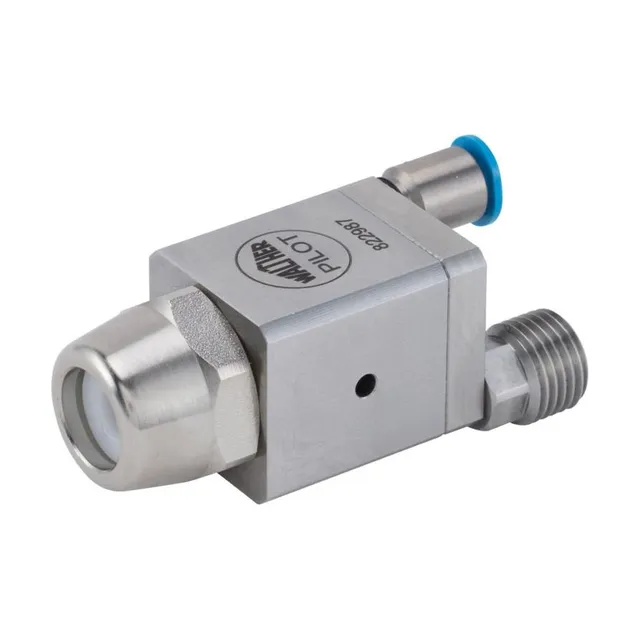
WA21
WALTHER PILOT WA21 mini airless automatic spray gun up to 120 bar – greases, oils, adhesives, ceramic glazes and stains, standard airless nozzles.
120 barPressure
- Weight [net/gross]
- 181 g
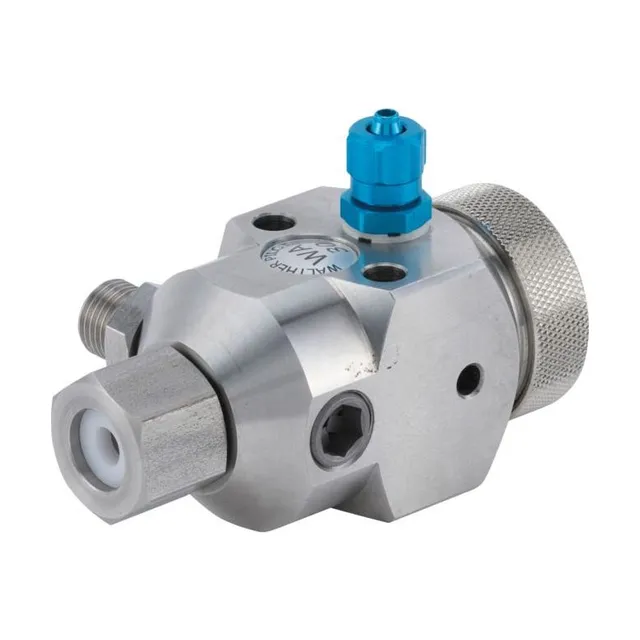
WA30
WALTHER PILOT WA30 airless automatic spray gun up to 350 bar – stainless steel or hardened aluminium body, also as a colour change valve.
350 barPressure
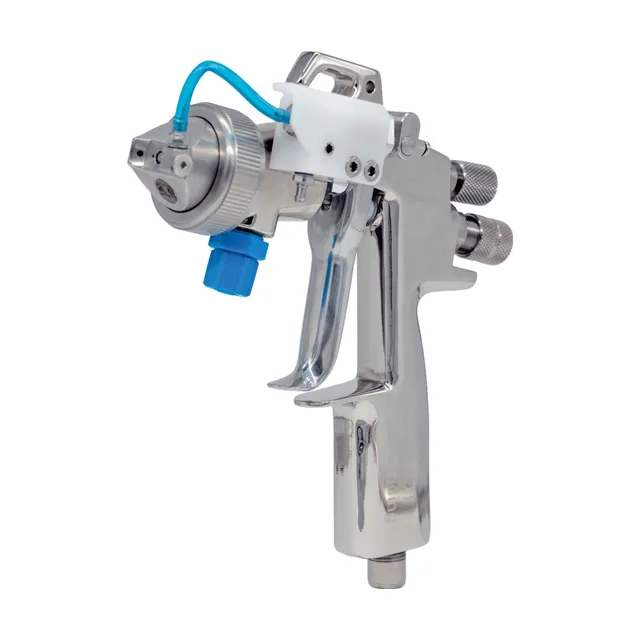
Pilot 2K-Bonding
WALTHER PILOT Pilot 2K-Bonding spray gun for two-component dispersion adhesives with external mixing – ratio approx. 4 : 1 to 12 : 1.
398 gWeight [net/gross]
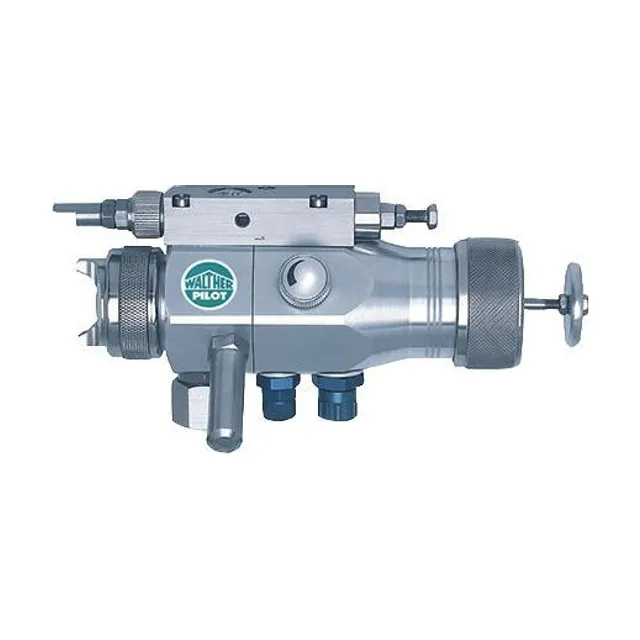
WA560-2K
WALTHER PILOT WA560-2K automatic spray gun for 2K dispersion adhesives on foam and textiles – external mixing approx. 1 : 1 to 13 : 1.
1,737 gWeight [net/gross]
Also searched as: gun, guns, spray gun, spray guns
How it works
How an air spray gun works
Material flows to the nozzle, which is closed by the needle. When the spray gun opens, air comes first, then the needle retracts and the material flows out. Atomising air from the annular gap of the air cap breaks it up into droplets and air from the horns shapes the pattern.
Manual spray gun: opened by the trigger – first the air valve, then the needle on further pulling. Suitable for small and medium-sized areas, repairs and decorative work.
Select a step or click a part of the diagram – we will show what it does, related terms, questions and products.
- Compressed air
- Paint / material
- Motion and recording
Description of all parts
- Material
Material flows into the spray gun from a cup or through a hose from a pressure tank or pump. In the material passage is a needle that closes the nozzle.
- Material supply
A cup on the spray gun (gravity, suction or pressure) or a hose connection from a pressure tank or pump. With automatic spray guns, the material can also circulate (supply and return connections).
WALTHER PILOT pressure and unpressurised tanks →
WAGNER spray pumps and packages →
- Material supply
- Air
Compressed air enters the spray gun. Its volume is set with the air regulator, the pattern width with the adjusting screw.
- Compressed air supply
Dry, clean air from the workshop supply. Automatic spray guns have separate connections for atomising air and shaping air.
WAGNER hoses and couplings → - Air and pattern control
The air volume is set by the air regulator, the pattern width continuously by the adjusting screw (closed = round pattern).
For example, the TOPFINISH GM 1030P changes the pattern width with a single knob and the air volume adjusts itself. For automatic spray guns, WAGNER distinguishes between air control in the gun (IC) and by external valves (EC).
- Compressed air supply
- Trigger
When the trigger is pulled slightly, the air valve opens – at first only air comes out.
- Trigger and air valve
Pulling the trigger slightly opens the air valve (pre-air); pulling further retracts the needle. The result depends on the sprayer – it is not exactly repeatable. - Control air
The line or robot control opens the spray gun with control air: first atomising and shaping air, then material. If the gun does not open, the cause may be low control air pressure.
- Trigger and air valve
- Needle and nozzle
Pulling further retracts the needle from the fluid nozzle and the material starts to flow. The material quantity is determined by the nozzle size and the material pressure, and fine-tuned with the needle stroke.
- Spray gun – needle and fluid nozzle
The gun body contains a spring-loaded fluid needle, an air valve and a fluid nozzle. The needle regulates the material flow; the nozzle determines its quantity.
Air spraying is divided into high-pressure (conventional), medium-pressure (HVLP+) and low-pressure (HVLP). Manual spray guns are used for one-off jobs, repairs and smaller areas; automatic spray guns for series production with repeatable results.
- Spray gun – needle and fluid nozzle
- Atomisation
Atomising air from the annular gap around the nozzle breaks the material up into droplets; air from the horns of the air cap shapes the pattern.
- Air cap
The central annular gap around the nozzle produces the atomising air; the holes in the horns produce the shaping air, which changes the round pattern into a flat one.
With HVLP, the gap between the air cap and the nozzle is larger – the air expands and has a low pressure at the outlet. The SupraCoat GA 3000SC is adapted to the material by changing the air cap.
- Air cap
Simplified principle of an air spray gun. Airless and AirCoat spray guns atomise using material pressure – their place in the system is shown in the airless and AirCoat pump diagram. We select the nozzle size, air cap and material supply according to the material.
Source: WALTHER PILOT – WaltherWiki (spraying methods, types of spray gun), PILOT III and GA 1020/1030 manuals; WAGNER – spray gun pages and brochures (walther-pilot.de, wagner-group.com).
Model comparison
| Model | Pressure | Nozzle sizes | Weight [net/gross] | Sound level |
|---|---|---|---|---|
| WA 81 | 6 bar | 0.5mm - 1.5mm | 112 g | 83 dB(A) |
| WA51 | 6 bar | 0.3mm - 1.5mm | 112 g | 83 dB(A) |
| GA 1030 Extrusion | 8 bar | 1.5 - 2.5mm | 643 g | – |
| GM 1030 Extrusion | 8 bar | 1.5 - 2.5mm | 482 g | – |
| GM 1030G AR | 8 bar | 1.5 - 3.5mm | – | 85 dB(A) |
| GM 1030P AR | 8 bar | 1.5 - 3.5mm | – | 85 dB(A) |
| Misch-N Automatik | 8 bar | 0.5mm - 1.2mm | 795 g | 86 dB(A) |
| Pilot I | 8 bar | 0.2mm - 1.5mm | 349 g | 72 dB(A) |
| Pilot II | 8 bar | 0.5mm - 3.5mm | 663 g | 79 dB(A) |
| Pilot III-F FA | 8 bar | 0.5mm - 3.5mm | 584 g | 85 dB(A) |
| Pilot III-F FB | 8 bar | 0.5mm - 3.5mm | 779 g | 85 dB(A) |
| Pilot III-K FA | 8 bar | 0.5mm - 3.5mm | 584 g | 85 dB(A) |
| Pilot III-K FB | 8 bar | 0.5mm - 3.5mm | 779 g | 85 dB(A) |
| Pilot Misch-N | 8 bar | 0.5mm - 2.5mm | 848 g | 83 dB(A) |
| Pilot Twin | 8 bar | Ø 0.2 - 1.5mm | 227g | 72 dB(A) |
| Pilot XIII FA | 8 bar | 0.8mm - 3.5mm | 715 g | 85 dB(A) |
| WA 100 | 8 bar | 0.3mm - 2.2mm | – | 83 dB(A) |
| WA 110 | 8 bar | 0.3mm - 0.5mm | 197.5 g | 83 dB(A) |
| WA600 | 8 bar | 0.3mm - 2.2mm | 353 g | 83 dB(A) |
| WAXV | 10 bar | 0.5mm - 3.5mm | 973 g | 86 dB(A) |
| WA21 | 120 bar | – | 181 g | – |
| WA30 | 350 bar | – | – | 82 dB(A) |
| Pilot 2K-Bonding | – | – | 398 g | 83 dB(A) |
| WA560-2K | – | 0.5mm - 2.0mm | 1,737 g | 86 dB(A) |
Data are taken from manufacturer documentation. We will verify them for your application before you order.
Frequently asked questions
Who sells WALTHER PILOT spray guns and tanks?
TECHNIKUM is the WALTHER PILOT representation – spray guns, pressure tanks and extraction. Services: sales and service. All brands: Manufacturers we represent.
Have a different question? Write to us – a technician will answer. Send an enquiry
Technical terms are explained in the glossary.