
WAGNER

WAGNER spray guns and atomisers
Manual and automatic Airspray, AirCoat, airless and electrostatic spray guns.
About WAGNER – Certified Partner for the Czech Republic and Slovakia
Send an enquirySolution: Industrial coatingCompare models in the table
Models (18)
Sorted by “Pressure”, lowest value first.
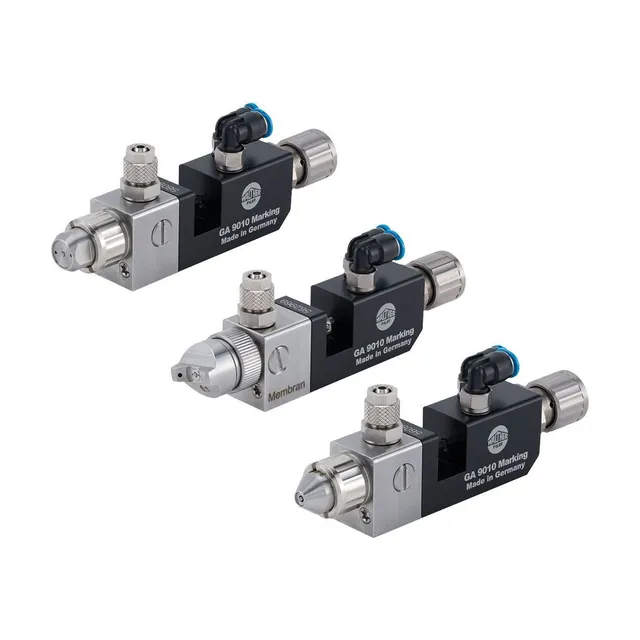
PILOT GA 9010 Marking
Precise PILOT GA 9010 Marking automatic spray gun for sharp marking with dots and lines – paints, inks and adhesives at short cycle times.
6 barPressure
- Technology
- Airspray - Conventional
- Weight [net/gross]
- 295 g
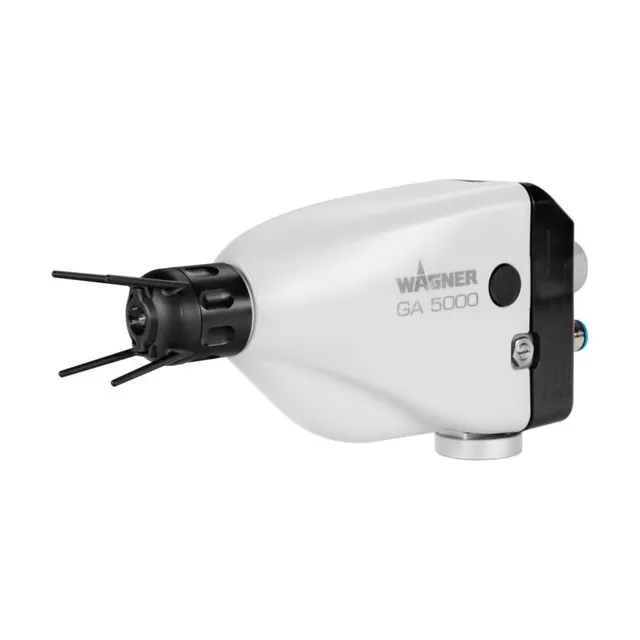
GA 5000
WAGNER GA 5000 electrostatic automatic spray guns for solvent-based and water-based paints – Airspray up to 8 bar and AirCoat up to 250 bar.
8 – 250 barPressure
- Technology
- depending on version
- Weight
- 1,000 – 1,200 g
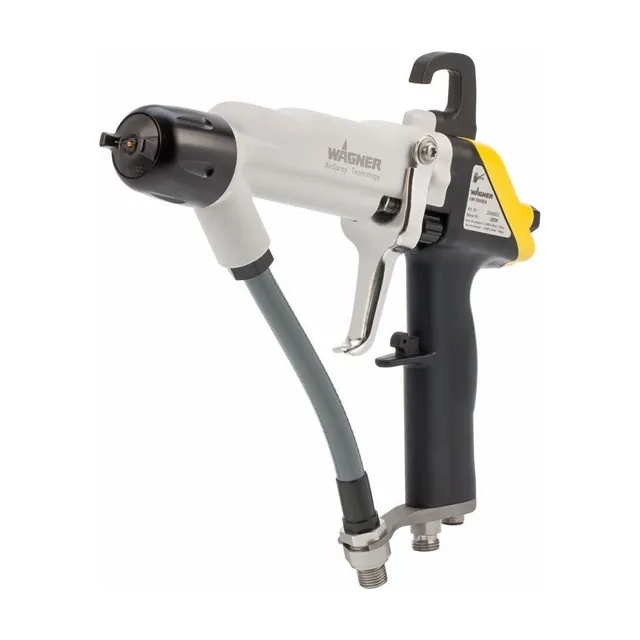
GM 5000
WAGNER GM 5000 electrostatic manual spray guns for solvent-based paints – Airspray (GM 5000EA) and AirCoat (GM 5000EAC) with integrated cascade.
8 – 250 barPressure
- Technology
- depending on version
- Weight
- 630 – 710 g
GM 5020
WAGNER GM 5020 electrostatic manual spray guns for water-based paints and release agents – Airspray (EAW) and AirCoat (EACW).
8 – 250 barPressure
- Technology
- depending on version
- Weight
- 580 g
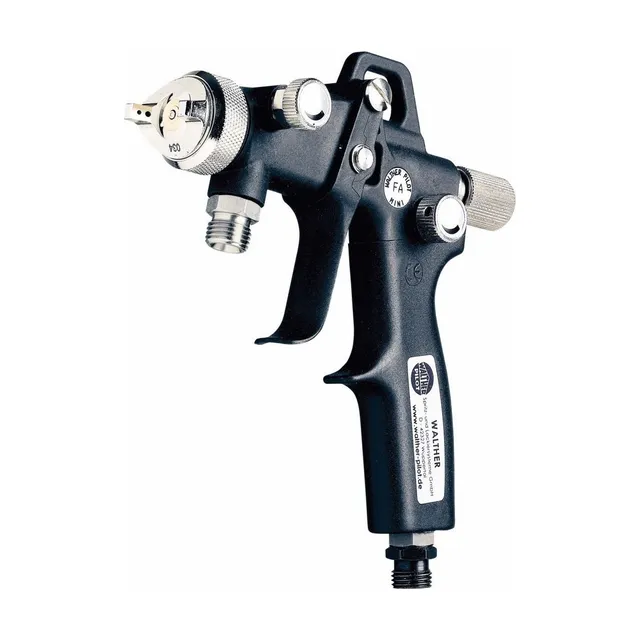
Pilot Mini
Extremely lightweight PILOT Mini Airspray manual spray gun made of high-strength plastic for small parts, repairs and decorative work.
8 barPressure
- Technology
- Airspray, Airspray - Conventional, Airspray - HVLP-Plus, Manual coating
- Weight
- 279 – 379 g
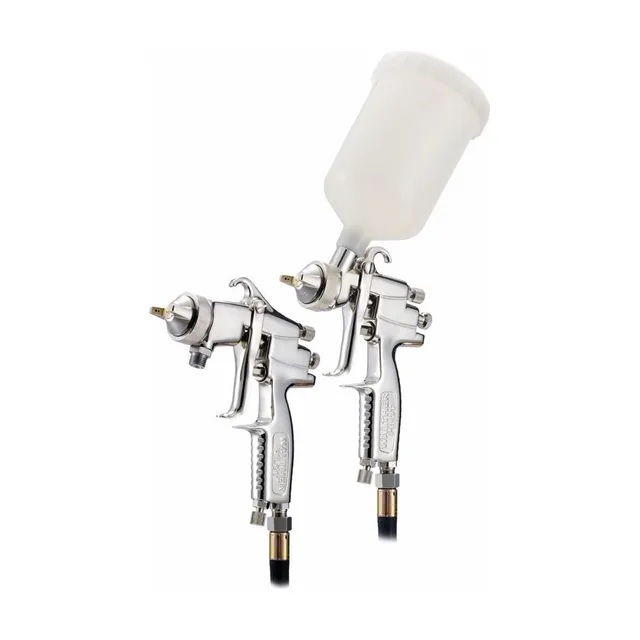
Pilot Trend
Affordable, versatile PILOT Trend Airspray manual spray gun with proven air cap technology – with a cup or with a material feed.
8 barPressure
- Technology
- Airspray, Airspray - Conventional, Airspray - HVLP, Manual coating
- Weight
- 482 – 677 g
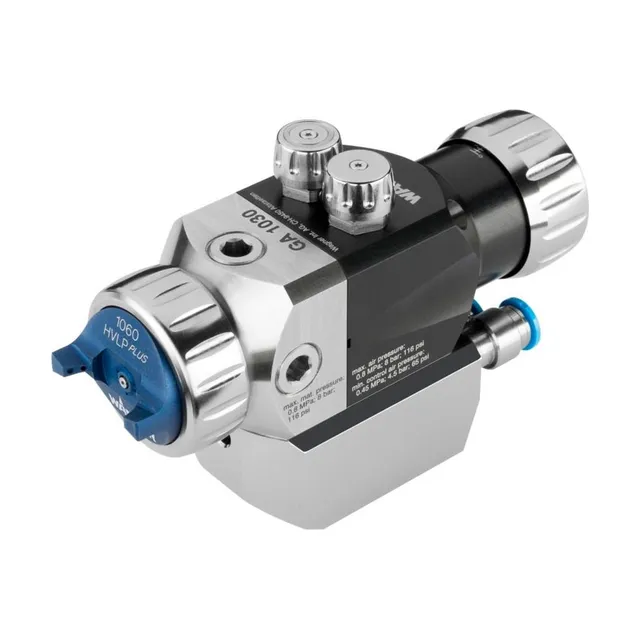
TOPFINISH GA 1020/1030
Universal automatic Airspray gun WAGNER TOPFINISH GA 1020/1030 for wood, metal, leather and plastics – GA 1020 with diaphragm seal for UV and abrasive materials.
8 barPressure
- Technology
- Airspray, Airspray - Conventional, Airspray - HVLP, Airspray - HVLP-Plus
- Weight [net/gross]
- 629 g
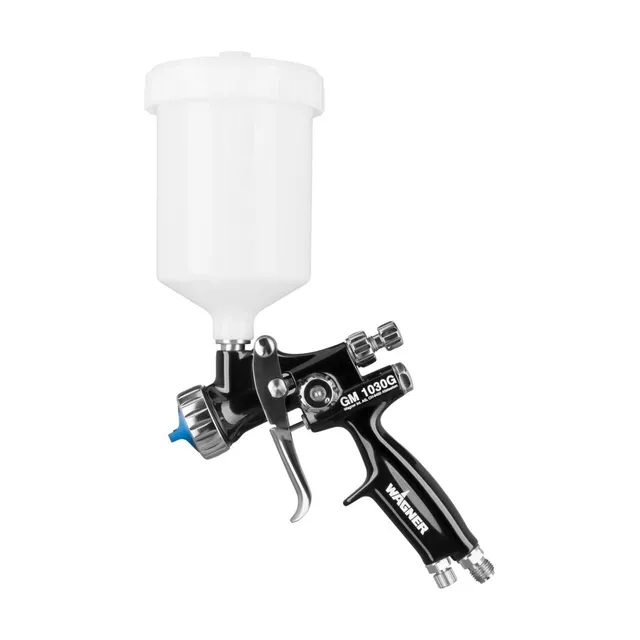
TOPFINISH GM 1030
Airspray manual spray guns WAGNER TOPFINISH GM 1030 – with a cup (GM 1030G) or with material feed (GM 1030P), transfer efficiency of up to 88 % according to the manufacturer.
8 barPressure
- Technology
- Airspray - Conventional, Airspray - HVLP, Airspray - HVLP-Plus, Manual coating
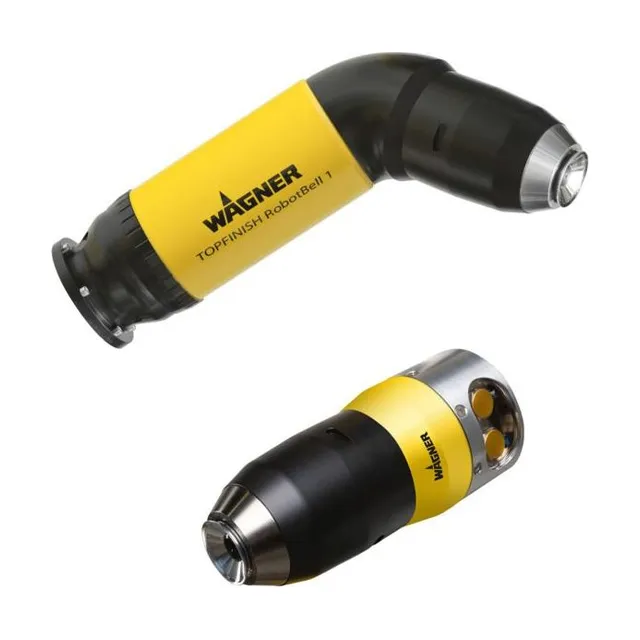
TOPFINISH RobotBell 1/ Bell 1S ECH
High-speed rotary atomiser WAGNER TOPFINISH RobotBell 1 / Bell 1S ECH with external charging for demanding coating with water-based paints.
8 barPressure
- Technology
- Airspray - Conventional, Rotation atomization, Electrostatic water-based
- Weight
- 7.4 kg
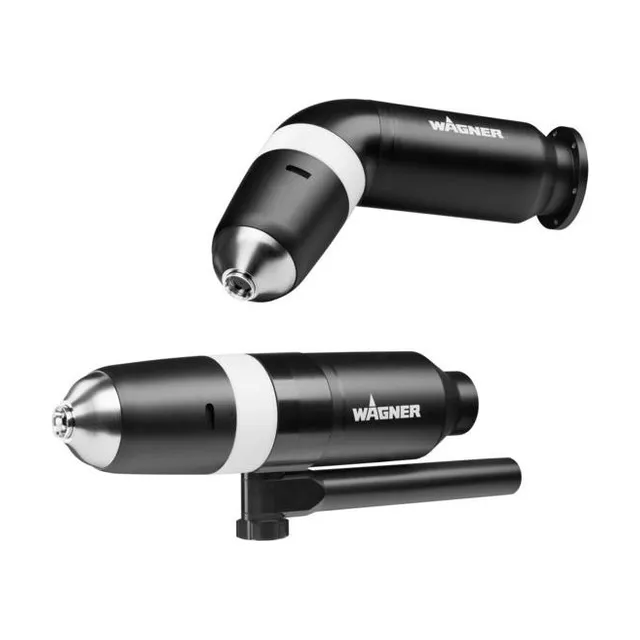
TOPFINISH RobotBell 2 / Bell 2S
High-speed rotary atomiser WAGNER TOPFINISH RobotBell 2 / Bell 2S with internal charging for water-based and solvent-based paints, ATEX zone 1.
8 barPressure
- Technology
- Airspray - Conventional, Rotation atomization
- Weight
- 5.3 kg
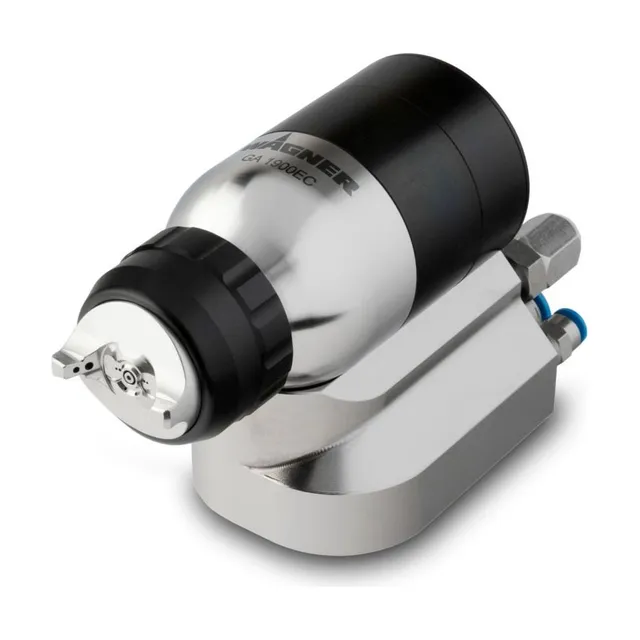
TOPFINISH GA 1900
Automatic Airspray gun WAGNER TOPFINISH GA 1900 for continuous operation and high-quality finishes – also for robots.
18 barPressure
- Technology
- Airspray - Conventional
- Weight
- 890 g
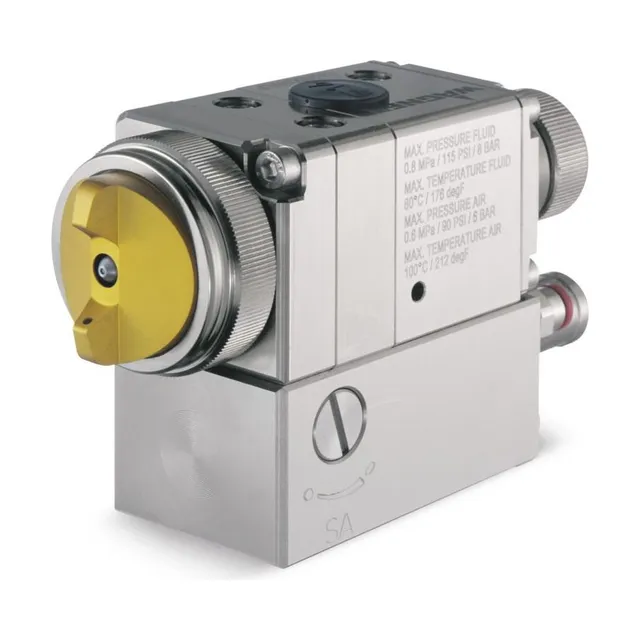
SupraCoat GA3000SC
Automatic spray gun WAGNER SupraCoat GA3000SC with pure HVLP technology – little overspray and an excellent finish even with thicker paints.
160 barPressure
- Technology
- Airspray - HVLP
- Weight
- 880 g
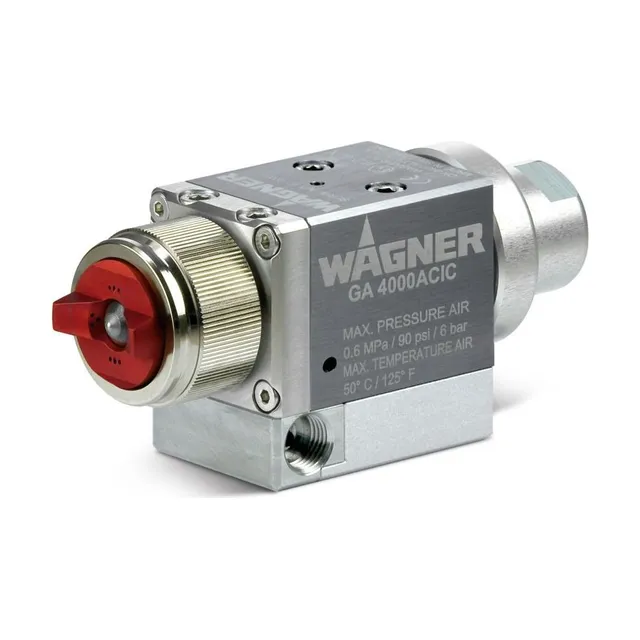
GA 4000ACIC/ACEC
WAGNER GA 4000 AirCoat automatic spray gun up to 250 bar – compact, for installation in automatic painting systems.
250 barPressure
- Technology
- AirCoat
- Weight
- 678 g
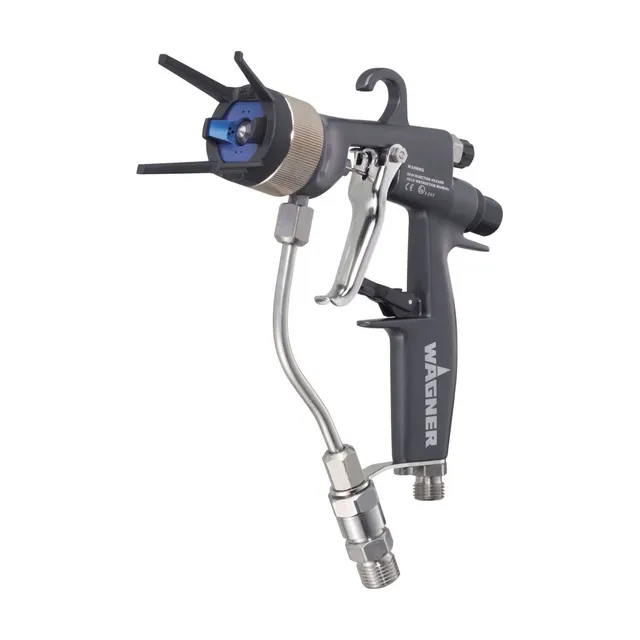
GM 4100AC
Lightweight WAGNER GM 4100AC AirCoat manual spray gun up to 250 bar – compact, with ergonomics for smaller hands.
250 barPressure
- Technology
- AirCoat
- Weight
- 600 g
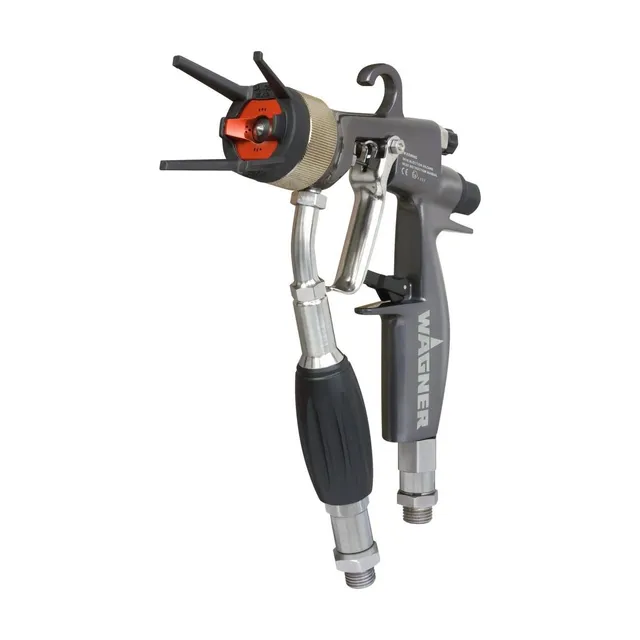
GM 4700AC
Lightweight WAGNER GM 4700AC AirCoat manual spray gun up to 250 bar – ergonomic for larger hands, with a cage filter that can be changed without tools.
250 barPressure
- Technology
- AirCoat
- Weight
- 597 g
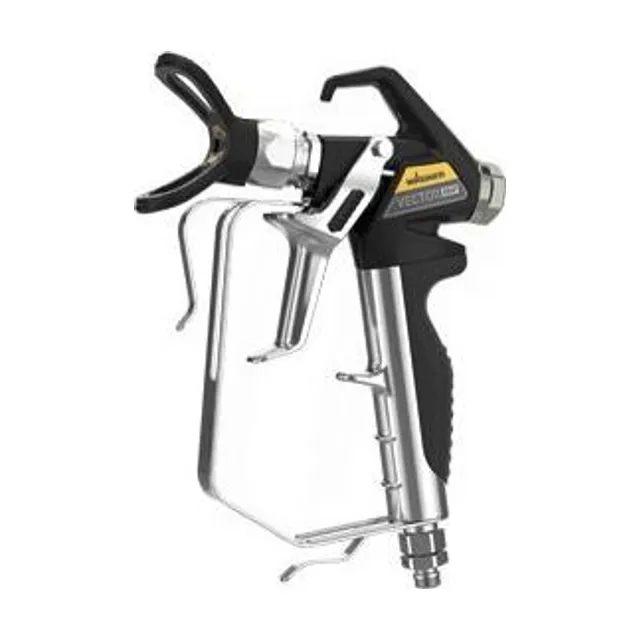
Vector Grip 4-finger
Robust Airless manual spray gun WAGNER Vector Grip with a 4-finger trigger – up to 270 bar for finishing coats.
270 barPressure
- Technology
- Airless
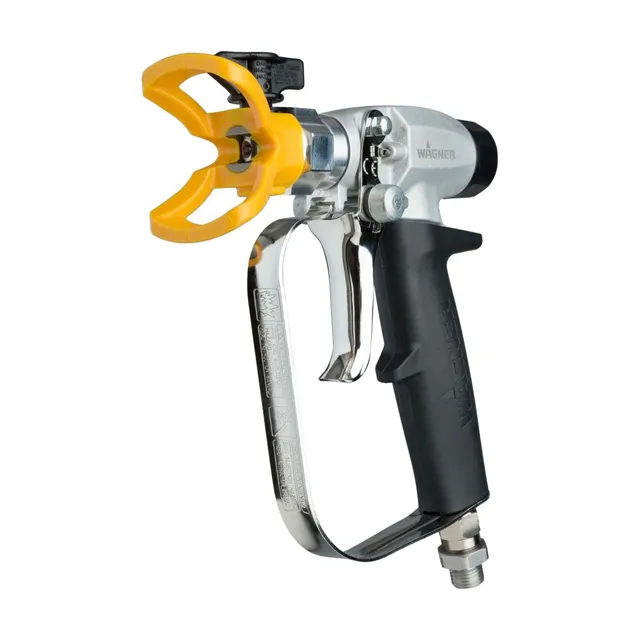
PROTEC GM 1
Airless manual spray gun WAGNER PROTEC GM 1 up to 350 bar for heavy-duty corrosion protection – light, robust, with ProfiTip reversible tip.
350 barPressure
- Technology
- Airless
- Weight
- 560 g
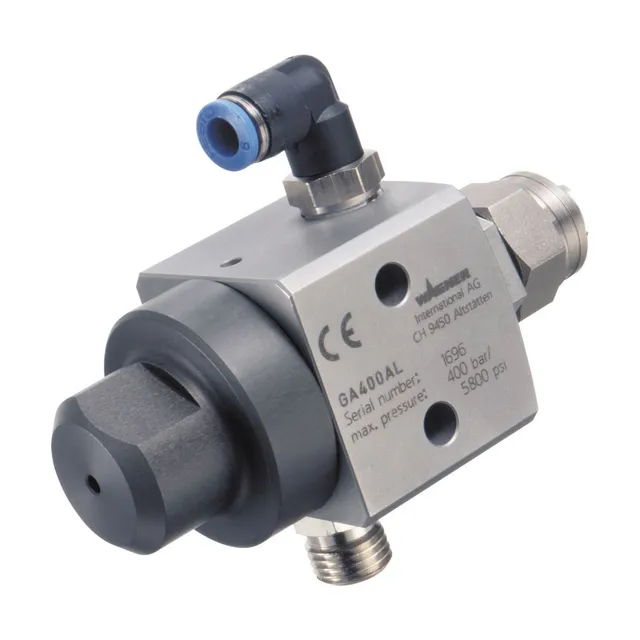
GA 250/400AL
Compact WAGNER GA 250/400AL Airless automatic spray gun up to 400 bar for automatic painting systems.
400 barPressure
- Technology
- Airless
- Weight
- 545 g
Also searched as: gun, guns, spray gun, spray guns, atomiser, atomisers
How it works
How an air spray gun works
Material flows to the nozzle, which is closed by the needle. When the spray gun opens, air comes first, then the needle retracts and the material flows out. Atomising air from the annular gap of the air cap breaks it up into droplets and air from the horns shapes the pattern.
Manual spray gun: opened by the trigger – first the air valve, then the needle on further pulling. Suitable for small and medium-sized areas, repairs and decorative work.
Select a step or click a part of the diagram – we will show what it does, related terms, questions and products.
- Compressed air
- Paint / material
- Motion and recording
Description of all parts
- Material
Material flows into the spray gun from a cup or through a hose from a pressure tank or pump. In the material passage is a needle that closes the nozzle.
- Material supply
A cup on the spray gun (gravity, suction or pressure) or a hose connection from a pressure tank or pump. With automatic spray guns, the material can also circulate (supply and return connections).
WALTHER PILOT pressure and unpressurised tanks →
WAGNER spray pumps and packages →
- Material supply
- Air
Compressed air enters the spray gun. Its volume is set with the air regulator, the pattern width with the adjusting screw.
- Compressed air supply
Dry, clean air from the workshop supply. Automatic spray guns have separate connections for atomising air and shaping air.
WAGNER hoses and couplings → - Air and pattern control
The air volume is set by the air regulator, the pattern width continuously by the adjusting screw (closed = round pattern).
For example, the TOPFINISH GM 1030P changes the pattern width with a single knob and the air volume adjusts itself. For automatic spray guns, WAGNER distinguishes between air control in the gun (IC) and by external valves (EC).
- Compressed air supply
- Trigger
When the trigger is pulled slightly, the air valve opens – at first only air comes out.
- Trigger and air valve
Pulling the trigger slightly opens the air valve (pre-air); pulling further retracts the needle. The result depends on the sprayer – it is not exactly repeatable. - Control air
The line or robot control opens the spray gun with control air: first atomising and shaping air, then material. If the gun does not open, the cause may be low control air pressure.
- Trigger and air valve
- Needle and nozzle
Pulling further retracts the needle from the fluid nozzle and the material starts to flow. The material quantity is determined by the nozzle size and the material pressure, and fine-tuned with the needle stroke.
- Spray gun – needle and fluid nozzle
The gun body contains a spring-loaded fluid needle, an air valve and a fluid nozzle. The needle regulates the material flow; the nozzle determines its quantity.
Air spraying is divided into high-pressure (conventional), medium-pressure (HVLP+) and low-pressure (HVLP). Manual spray guns are used for one-off jobs, repairs and smaller areas; automatic spray guns for series production with repeatable results.
- Spray gun – needle and fluid nozzle
- Atomisation
Atomising air from the annular gap around the nozzle breaks the material up into droplets; air from the horns of the air cap shapes the pattern.
- Air cap
The central annular gap around the nozzle produces the atomising air; the holes in the horns produce the shaping air, which changes the round pattern into a flat one.
With HVLP, the gap between the air cap and the nozzle is larger – the air expands and has a low pressure at the outlet. The SupraCoat GA 3000SC is adapted to the material by changing the air cap.
- Air cap
Simplified principle of an air spray gun. Airless and AirCoat spray guns atomise using material pressure – their place in the system is shown in the airless and AirCoat pump diagram. We select the nozzle size, air cap and material supply according to the material.
Source: WALTHER PILOT – WaltherWiki (spraying methods, types of spray gun), PILOT III and GA 1020/1030 manuals; WAGNER – spray gun pages and brochures (walther-pilot.de, wagner-group.com).
Videos
Presented by Peter Kovár, WAGNER Sales Manager for the Czech Republic and Slovakia. The video is in Slovak.
Airless gun and its strainerManual gun for spraying without added air and the strainer in its handle. Manual spray gunsManual spray guns for AirCoat, Airless and low pressure – from the GM 4700AC to the GM 1030. Needles and nozzles for guns, made to measureNeedles, nozzles and air caps are selected according to the material and the gun.
Model comparison
| Model | Pressure | Nozzle sizes | Weight [net/gross] | Sound level |
|---|---|---|---|---|
| PILOT GA 9010 Marking | 6 bar | 0.5mm - 1.5mm | 295 g | 87 dB(A) |
| GA 5000 | 8 – 250 bar | 0.3-2 mm | 1,000 – 1,200 g | 73 – 78 dB(A) |
| GM 5000 | 8 – 250 bar | – | 630 – 710 g | 73 dB(A) |
| GM 5020 | 8 – 250 bar | – | 580 g | 78 dB(A) |
| Pilot Mini | 8 bar | 0.3-2.2 mm | 279 – 379 g | 85 dB(A) |
| Pilot Trend | 8 bar | 0.5-2.5 mm | 482 – 677 g | 85 dB(A) |
| TOPFINISH GA 1020/1030 | 8 bar | 0.3-3.5 mm | 629 g | 85 dB(A) |
| TOPFINISH GM 1030 | 8 bar | by version | – | 85 dB(A) |
| TOPFINISH RobotBell 1/ Bell 1S ECH | 8 bar | 0.8-1.7 mm | 7.4 kg | – |
| TOPFINISH RobotBell 2 / Bell 2S | 8 bar | – | 5.3 kg | – |
| TOPFINISH GA 1900 | 18 bar | 0.5-1.4 mm | 890 g | 102 dB(A) |
| SupraCoat GA3000SC | 160 bar | – | 880 g | 82 dB(A) |
| GA 4000ACIC/ACEC | 250 bar | 0.007-0.023 " | 678 g | 82 dB(A) |
| GM 4100AC | 250 bar | 0.007-0.023 " | 600 g | 82 dB(A) |
| GM 4700AC | 250 bar | 0.007-0.023 " | 597 g | 82 dB(A) |
| Vector Grip 4-finger | 270 bar | 0.007-0.052 " | – | 81 dB(A) |
| PROTEC GM 1 | 350 bar | 0.007-0.065 " | 560 g | 85 dB(A) |
| GA 250/400AL | 400 bar | 0.007-0.052 " | 545 g | 84 dB(A) |
Data are taken from manufacturer documentation. We will verify them for your application before you order.
Frequently asked questions
How do I choose a spray gun?
By application method (Airspray, AirCoat, Airless, electrostatic application, rotary atomisation), manual or automatic operation, and material. The intended use is stated for each model below.
Have a different question? Write to us – a technician will answer. Send an enquiry
Technical terms are explained in the glossary.