
WAGNER

WAGNER GA 250/400AL
Compact WAGNER GA 250/400AL Airless automatic spray gun up to 400 bar for automatic painting systems.
Who it is for: Metal coating, Wood coating
- 400 barPressure
- 0.007-0.052 "Nozzle size
- 545 gWeight
Enquire about this productBring your paint – we will test it
The technician for your field will contact you as soon as possible. Prices are provided in our quotation.
Why WAGNER GA 250/400AL
- Long service lifeAll wetted parts are made of stainless steel – long service life and corrosion resistance.
- Repeatable resultsPrecise gun switching delivers repeatable results at any time and high process reliability.
- Thicker materials tooWAGNER Airless guns also atomise higher-viscosity materials correctly.
The GA 250/400AL is a compact Airless automatic spray gun for installation in automatic painting systems, available in pressure versions for different applications and compatible with various WAGNER nozzle systems. It handles water-based, solvent-based, abrasive and moisture-sensitive materials.
Applications: automatic painting systems
Source of text: manufacturer’s page
Technical data
- Application area
- Metal coating, Wood coating
- Technology
- Airless
- Materials
- Water-borne, Solvent-borne, Abrasive, sensitive to moisture
- Material Wetted Parts
- Stainless steel, Carbide, PA (polyamide), UHMW-PE (ultra-high molecular weight polyethylene)
- Dimensions
- 104 x 40 x 40 mm
- Weight
- 545 g
- Air inlet pressure
- 4,5–8 bar
- Pressure
- 400 bar
- Max. Sound Level
- 84 dB(A)
- Nozzle size
- 0.007-0.052 "
Further manufacturer data
- Control air connection
- I G 1/8''
Data are taken from manufacturer documentation. We will verify them for your application before you order. Request a technical data sheet
Suitable for
- exterior plastic parts
- interior plastic parts
- aluminium and steel wheels
- kitchens and furniture
- windows and doors
- seating furniture
- interior elements and accessories
- construction
- lorries, buses and other vehicles
- agriculture
- light construction machinery
- heavy construction machinery
- containers and trailers
How it works
How airless and AirCoat spraying works
A pump driven by compressed air draws in the paint and pushes it at high pressure through the filter and hose to the gun. The paint is atomised by the narrow nozzle orifice. With AirCoat, the gun also receives atomising air, which envelops and softens the spray jet.
Airless: only the material hose goes to the gun. The paint is atomised by the material pressure in the nozzle alone – no air is supplied to the gun.
Select a step or click a part of the diagram – we will show what it does, related terms, questions and products.
- Compressed air
- Paint / material
- Material under high pressure
Description of all parts
- Material
The pump draws in paint through a suction hose or suction tube directly from the bucket or drum.
- Material container
Bucket or drum from which the pump draws paint through a suction hose or suction tube.
WAGNER suction and material preparation →
- Material container
- Drive air
Compressed air from the supply passes through the air service unit with regulator and drives the pump's air motor.
- Compressed air supply
Compressed air from the workshop supply drives the pump and, with AirCoat, also serves as atomising air in the gun.
WAGNER hoses and couplings → - Air service unit with regulator
Sets the air pressure for the pump motor – and thus also the material pressure.
Air goes to the pump motor via a pressure regulator and ball valve. For AirCoat, an additional regulator with a filter for the gun air is mounted on the control unit of some pumps (for example Cobra, Wildcat, Puma).
- Compressed air supply
- Pump and filter
The piston or double-diaphragm pump generates high material pressure – according to the transmission ratio. The material filter catches impurities upstream of the gun.
- Pump
An air motor drives a piston or double-diaphragm pump. The transmission ratio determines how many times higher the material pressure is than the air pressure.
Cobra, for example, is a double-diaphragm pump: the air motor moves a piston, which moves the diaphragms via hydraulic oil – with each stroke it draws in and delivers at the same time. IceBreaker piston pumps have an air motor resistant to icing and fast-switching valves with low pulsation. - Material filter
Catches impurities in the material so that they do not clog the nozzle.
In addition to the filter at the pump, an in-line cage filter is used; some guns (Vector Grip, PROTEC GM 1) have a filter in the handle.
WAGNER filters, regulators and valves →
- Pump
- Hose
The high-pressure hose carries the material to the gun. With AirCoat, an air hose also goes to the gun (twin hose).
- High-pressure hose
Carries the material at high pressure from the pump to the gun. With AirCoat, a twin hose is used – material and air hose together.
WAGNER hoses and couplings → - Atomising air (AirCoat only)
With AirCoat, air is supplied to the gun via an air hose. The gun's air cap regulates it and envelops the spray jet with it – atomisation is finer. With pure airless, no air is supplied to the gun.
AirCoat works with a lower material pressure than airless – the spray jet is softer, with less mist and less overspray than with air spraying.
- High-pressure hose
- Gun and nozzle
The nozzle atomises the material by pressure difference. The orifice size and nozzle angle determine the quantity and width of the spray jet. With AirCoat, the gun's air cap envelops the jet with atomising air.
- Spray gun
A manual or automatic airless or AirCoat gun opens and closes the material flow.
Airless guns are suited to thick coats and fast work – corrosion protection, wind turbines, undersides of rail vehicles. AirCoat combines the surface quality of air spraying with the speed of airless – windows, furniture, gearboxes, vehicle bodies.
WALTHER PILOT spray guns → - Nozzle
The narrow nozzle orifice atomises the material. The orifice size and spray angle determine the quantity and width of the spray jet.
WAGNER nozzles for airless and AirCoat →
- Spray gun
Simplified principle with a pneumatic pump. We select the suction method (bucket, drum, hopper), pump type and accessories according to the material and production. This is not a connection guide.
Source: WAGNER – airless and AirCoat technology guide and pump pages (wagner-group.com); WALTHER PILOT – WaltherWiki, spraying methods.
Similar models – WAGNER spray guns and atomisers
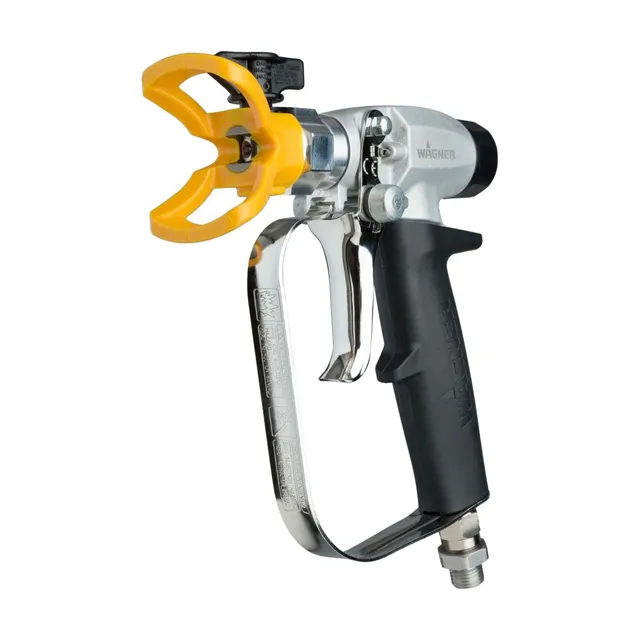
WAGNER
PROTEC GM 1
Airless manual spray gun WAGNER PROTEC GM 1 up to 350 bar for heavy-duty corrosion protection – light, robust, with ProfiTip reversible tip.
350 barPressure
- Technology
- Airless
- Weight
- 560 g
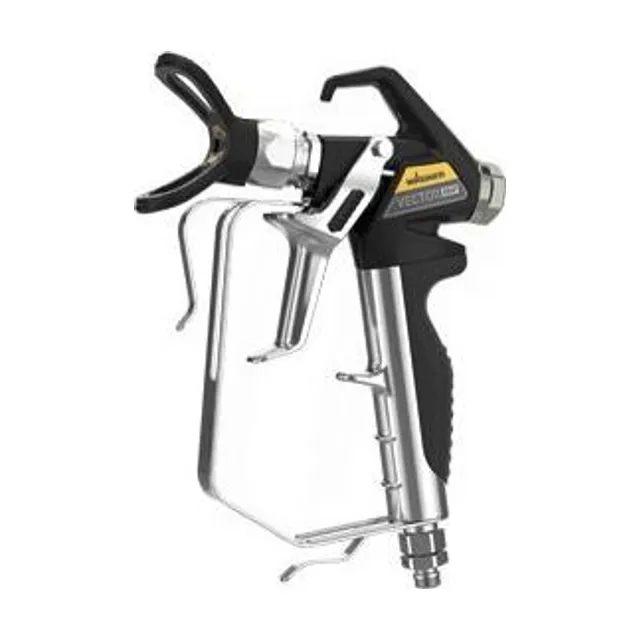
WAGNER
Vector Grip 4-finger
Robust Airless manual spray gun WAGNER Vector Grip with a 4-finger trigger – up to 270 bar for finishing coats.
270 barPressure
- Technology
- Airless
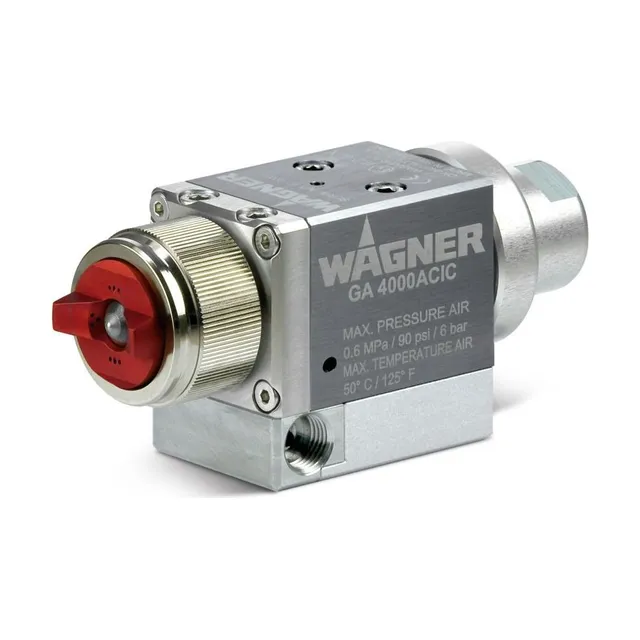
WAGNER
GA 4000ACIC/ACEC
WAGNER GA 4000 AirCoat automatic spray gun up to 250 bar – compact, for installation in automatic painting systems.
250 barPressure
- Technology
- AirCoat
- Weight
- 678 g
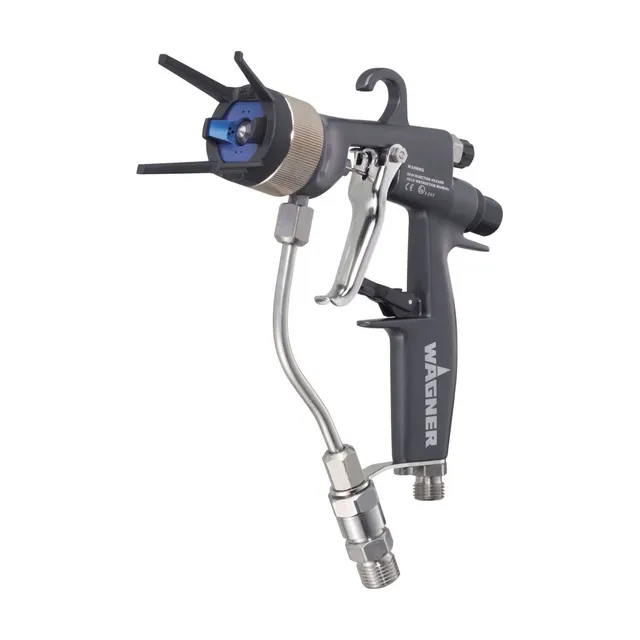
WAGNER
GM 4100AC
Lightweight WAGNER GM 4100AC AirCoat manual spray gun up to 250 bar – compact, with ergonomics for smaller hands.
250 barPressure
- Technology
- AirCoat
- Weight
- 600 g
Frequently asked questions
What is the maximum material pressure of the WAGNER GA 250/400AL?
According to the manufacturer's technical data for the WAGNER GA 250/400AL: maximum material pressure 400 bar.
Which nozzle sizes does the WAGNER GA 250/400AL take?
According to the manufacturer's technical data for the WAGNER GA 250/400AL: nozzle size 0.007–0.052 in.
Which materials can the WAGNER GA 250/400AL process?
According to the manufacturer, materials: water-based, solvent-based, abrasive, moisture-sensitive.
What is the WAGNER GA 250/400AL designed for and which spraying methods does it use?
According to the manufacturer's technical data for the WAGNER GA 250/400AL: application method: Airless; applications: metal, wood.
What connections does the WAGNER GA 250/400AL require?
According to the manufacturer's technical data for the WAGNER GA 250/400AL: air inlet pressure 4.5–8 bar.
How much does the WAGNER GA 250/400AL weigh and how loud is it?
Weight 545 g; dimensions 104 × 40 × 40 mm; max. noise level 84 dB(A).
What materials are the paint-wetted parts of the WAGNER GA 250/400AL made of?
According to the manufacturer, the paint-wetted parts of the WAGNER GA 250/400AL are made of the following materials: stainless steel, tungsten carbide, polyamide (PA), UHMW-PE.
Have a different question? Write to us – a technician will answer. Send an enquiry
Technical terms are explained in the glossary.