
WAGNER

WAGNER TOPFINISH GA 1020/1030
Universal automatic Airspray gun WAGNER TOPFINISH GA 1020/1030 for wood, metal, leather and plastics – GA 1020 with diaphragm seal for UV and abrasive materials.
Who it is for: Metal coating, Plastic coating, Wood coating, Wheel coating
- 8 barPressure
- 0.3-3.5 mmNozzle size
- 629 gWeight [net/gross]
Enquire about this productBring your paint – we will test it
The technician for your field will contact you as soon as possible. Prices are provided in our quotation.
Why WAGNER TOPFINISH GA 1020/1030
- Less oversprayOptimised air guidance reduces overspray and material consumption; according to the manufacturer, transfer efficiency of up to 85 %. (according to the manufacturer)
- Lower maintenance costsTwo-piece nozzle (head and nut) – when worn, only the head is replaced; the needle has a wear-resistant surface finish.
- Long service intervalsDurable seals and components, quick replacement of wear parts.
- Air savingsThe air supply is automatically cut off when the needle closes.
TOPFINISH GA 1030 is an automatic Airspray gun with fine atomisation and a high-quality spray pattern, designed for reliable coating in continuous operation. For UV and highly abrasive materials it is supplied as the GA 1020 with a diaphragm seal. It handles water-based and solvent-based materials, high-solids materials and materials of low to high viscosity; it is mounted directly or via adapters, with internal or external air control.
Applications: automatic coating, wood, metal, leather, plastics, UV and abrasive materials (GA 1020)
Source of text: manufacturer’s page 1, manufacturer’s page 2, manufacturer’s brochure (PDF, in English)
Technical data
- Application area
- Metal coating, Plastic coating, Wood coating, Wheel coating
- Technology
- Airspray, Airspray - Conventional, Airspray - HVLP, Airspray - HVLP-Plus
- Materials
- Water-borne, Solvent-borne, Abrasive, shear sensitive, sensitive to moisture
- Material Wetted Parts
- Stainless steel 1.4305
- Pressure
- 8 bar
- Material temperature
- 5–80 °C
- Nozzle size
- 0.3-3.5 mm
- Sound level
- 85 dB(A)
- Product dimensions [LxWxH]
- 144x40x40mm
- Weight [net/gross]
- 629 g
Further manufacturer data
- Material input
- G 1/4"
Data are taken from manufacturer documentation. We will verify them for your application before you order. Request a technical data sheet
Accessories for this equipment
According to manufacturer documentation. We will select the exact version (bore, pressure, length) with you based on the equipment and material.
WAGNER TOPFINISH nozzle and needle sets
WAGNER hoses and couplings
How it works
How an air spray gun works
Material flows to the nozzle, which is closed by the needle. When the spray gun opens, air comes first, then the needle retracts and the material flows out. Atomising air from the annular gap of the air cap breaks it up into droplets and air from the horns shapes the pattern.
Automatic spray gun: instead of a trigger, it is opened by control air from the line or robot controller. The result is repeatable in series production.
Select a step or click a part of the diagram – we will show what it does, related terms, questions and products.
- Compressed air
- Paint / material
- Motion and recording
Description of all parts
- Material
Material flows into the spray gun from a cup or through a hose from a pressure tank or pump. In the material passage is a needle that closes the nozzle.
- Material supply
A cup on the spray gun (gravity, suction or pressure) or a hose connection from a pressure tank or pump. With automatic spray guns, the material can also circulate (supply and return connections).
WALTHER PILOT pressure and unpressurised tanks →
WAGNER spray pumps and packages →
- Material supply
- Air
Compressed air enters the spray gun. Its volume is set with the air regulator, the pattern width with the adjusting screw.
- Compressed air supply
Dry, clean air from the workshop supply. Automatic spray guns have separate connections for atomising air and shaping air.
WAGNER hoses and couplings → - Air and pattern control
The air volume is set by the air regulator, the pattern width continuously by the adjusting screw (closed = round pattern).
For example, the TOPFINISH GM 1030P changes the pattern width with a single knob and the air volume adjusts itself. For automatic spray guns, WAGNER distinguishes between air control in the gun (IC) and by external valves (EC).
- Compressed air supply
- Trigger
When the trigger is pulled slightly, the air valve opens – at first only air comes out.
- Trigger and air valve
Pulling the trigger slightly opens the air valve (pre-air); pulling further retracts the needle. The result depends on the sprayer – it is not exactly repeatable. - Control air
The line or robot control opens the spray gun with control air: first atomising and shaping air, then material. If the gun does not open, the cause may be low control air pressure.
- Trigger and air valve
- Needle and nozzle
Pulling further retracts the needle from the fluid nozzle and the material starts to flow. The material quantity is determined by the nozzle size and the material pressure, and fine-tuned with the needle stroke.
- Spray gun – needle and fluid nozzle: TOPFINISH GA 1020/1030
The gun body contains a spring-loaded fluid needle, an air valve and a fluid nozzle. The needle regulates the material flow; the nozzle determines its quantity.
Air spraying is divided into high-pressure (conventional), medium-pressure (HVLP+) and low-pressure (HVLP). Manual spray guns are used for one-off jobs, repairs and smaller areas; automatic spray guns for series production with repeatable results.
- Spray gun – needle and fluid nozzle: TOPFINISH GA 1020/1030
- Atomisation
Atomising air from the annular gap around the nozzle breaks the material up into droplets; air from the horns of the air cap shapes the pattern.
- Air cap
The central annular gap around the nozzle produces the atomising air; the holes in the horns produce the shaping air, which changes the round pattern into a flat one.
With HVLP, the gap between the air cap and the nozzle is larger – the air expands and has a low pressure at the outlet. The SupraCoat GA 3000SC is adapted to the material by changing the air cap.
- Air cap
Simplified principle of an air spray gun. Airless and AirCoat spray guns atomise using material pressure – their place in the system is shown in the airless and AirCoat pump diagram. We select the nozzle size, air cap and material supply according to the material.
Source: WALTHER PILOT – WaltherWiki (spraying methods, types of spray gun), PILOT III and GA 1020/1030 manuals; WAGNER – spray gun pages and brochures (walther-pilot.de, wagner-group.com).
Video
Presented by Peter Kovár, WAGNER Sales Manager for the Czech Republic and Slovakia. The video is in Slovak.
Automatic spray guns for lines and robotsAutomatic spray guns for painting lines and robots, and parts for them.
Similar models – WAGNER spray guns and atomisers
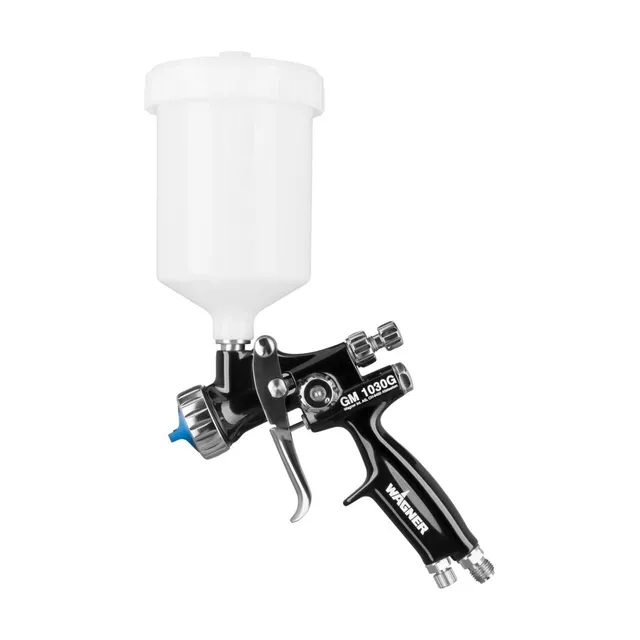
WAGNER
TOPFINISH GM 1030
Airspray manual spray guns WAGNER TOPFINISH GM 1030 – with a cup (GM 1030G) or with material feed (GM 1030P), transfer efficiency of up to 88 % according to the manufacturer.
8 barPressure
- Technology
- Airspray - Conventional, Airspray - HVLP, Airspray - HVLP-Plus, Manual coating
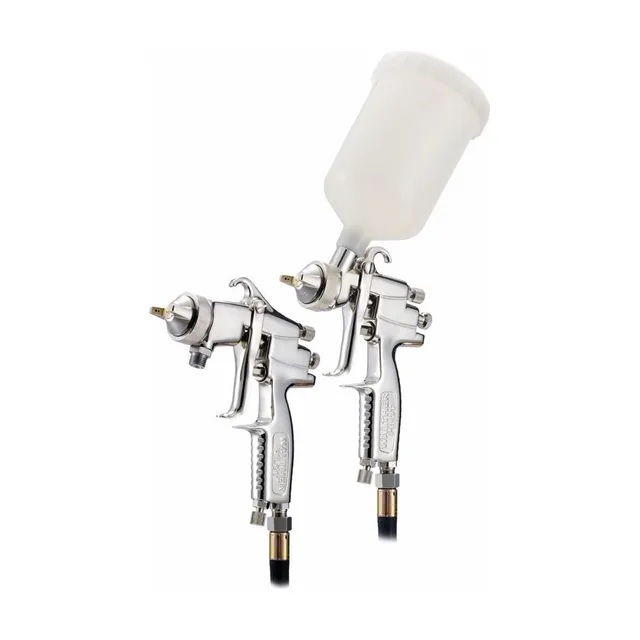
WAGNER
Pilot Trend
Affordable, versatile PILOT Trend Airspray manual spray gun with proven air cap technology – with a cup or with a material feed.
8 barPressure
- Technology
- Airspray, Airspray - Conventional, Airspray - HVLP, Manual coating
- Weight
- 482 – 677 g
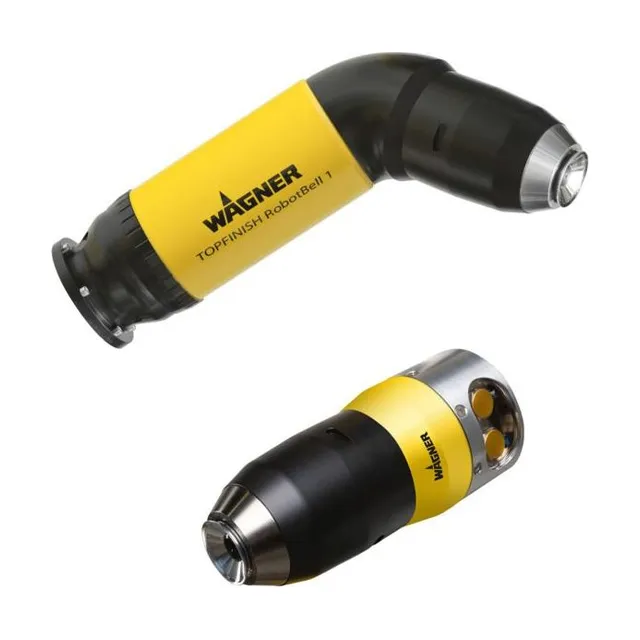
WAGNER
TOPFINISH RobotBell 1/ Bell 1S ECH
High-speed rotary atomiser WAGNER TOPFINISH RobotBell 1 / Bell 1S ECH with external charging for demanding coating with water-based paints.
8 barPressure
- Technology
- Airspray - Conventional, Rotation atomization, Electrostatic water-based
- Weight
- 7.4 kg
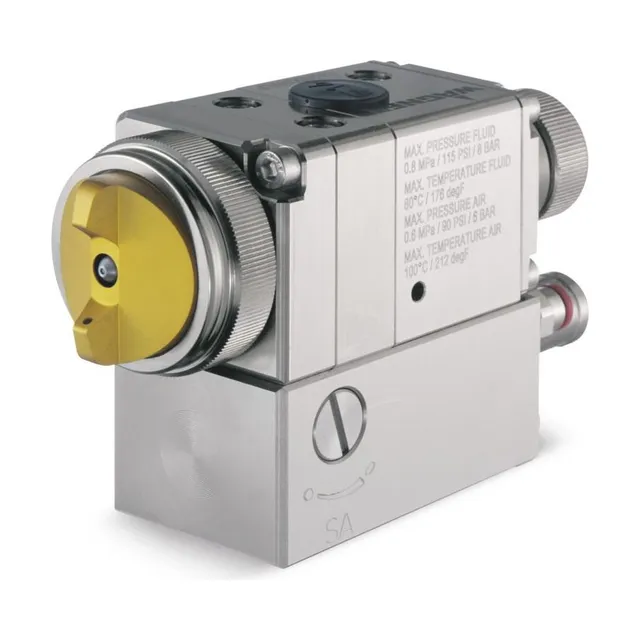
WAGNER
SupraCoat GA3000SC
Automatic spray gun WAGNER SupraCoat GA3000SC with pure HVLP technology – little overspray and an excellent finish even with thicker paints.
160 barPressure
- Technology
- Airspray - HVLP
- Weight
- 880 g
Frequently asked questions
What is the maximum material pressure of the WAGNER TOPFINISH GA 1020/1030?
The manufacturer's technical data for the WAGNER TOPFINISH GA 1020/1030 state: maximum material pressure 8 bar.
What nozzle sizes are available for the WAGNER TOPFINISH GA 1020/1030?
Manufacturer's technical data for the WAGNER TOPFINISH GA 1020/1030 – nozzle size: 0.3–3.5 mm.
What materials can the WAGNER TOPFINISH GA 1020/1030 handle?
Materials according to the manufacturer: water-based, solvent-based, abrasive, shear-sensitive, moisture-sensitive; material temperature 5–80 °C.
What is the WAGNER TOPFINISH GA 1020/1030 designed for and which spraying method does it use?
Application method according to the manufacturer: Airspray, Airspray (conventional), Airspray HVLP, Airspray HVLP+; applications: metal, plastics, wood, wheel rim coating.
How much does the WAGNER TOPFINISH GA 1020/1030 weigh and how loud is it?
The manufacturer's technical data for the WAGNER TOPFINISH GA 1020/1030 state: net/gross weight 629 g; noise level 85 dB(A).
What materials are the paint-contacting parts of the WAGNER TOPFINISH GA 1020/1030 made of?
According to the manufacturer, the paint-contacting parts of the WAGNER TOPFINISH GA 1020/1030 are made of the following materials: stainless steel 1.4305.
Have a different question? Write to us – a technician will answer. Send an enquiry
Technical terms are explained in the glossary.