Article
It has never been easier to start robotic painting
Published
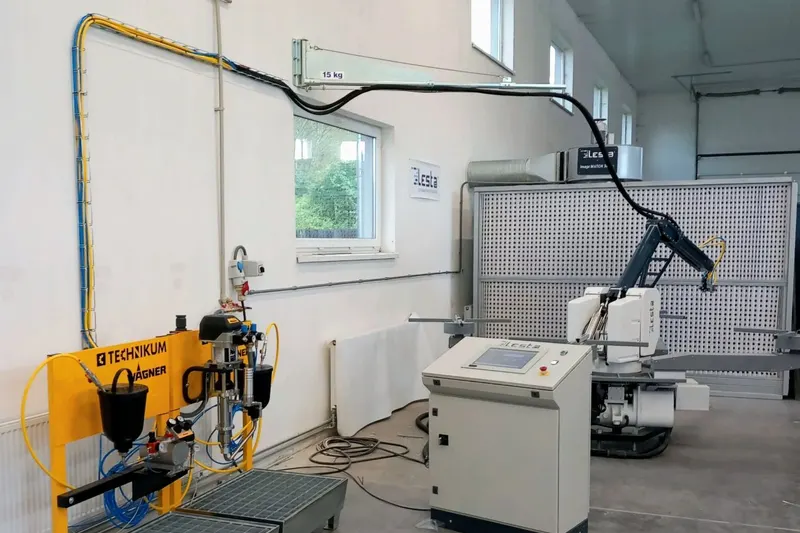
Today you don't need a robot programmer to start robotic painting. A LESTA robot learns the path from your painter, WAGNER supplies the spray equipment and TECHNIKUM builds the workstation. Let's honestly work out what manual painting costs you – and what would change with a robot in the booth.

Monday, 6:00
The parts are hung, the booth is ready and the customer expects them tomorrow. Then the phone rings: "Boss, I'm not coming in today, I've got a fever."
Every paint-shop owner knows this call. You can't replace a good painter overnight. It takes years to learn the trade. He knows the material, where the paint runs into a part and where it needs more. That is exactly why the whole production depends on him.
Your painter is human. And that's fine
Nobody paints the same way every day. One day he slept badly, another day his mind is elsewhere, another day he's had a rough weekend. He argued at home in the morning, he's tired in the afternoon, on Friday he's already thinking about the weekend. That's normal – he's human.
But the paint shows it. Uneven film thickness, runs, missed spots, more overspray. Then come the complaints, the repaints and the extra material. And when the painter is on holiday, off sick or asleep at home in the evening, the booth stands still.
Work out what manual painting costs you
Other people's numbers won't help you – work it out with your own:
- Wages with contributions – how much does one painter cost you a year? And how much do two cost, if you want to cover holidays, sick days or a second shift?
- Downtime – how many days a year does the booth stand still because the painter is missing?
- Inconsistent quality – how many parts a year do you paint again? How much do the extra material, time and complaints cost?
- Overspray – how much paint ends up on the filters instead of on the part? More in the article Transfer efficiency and overspray.
- Finding people – how long does it take to find and train a new painter, and how much does it cost you?
Add up these costs over five years. Only that number makes sense to put next to an investment in a robotic workstation. A robot is not a small purchase, but compared with the cost of two painters, downtime and defects, it is no longer an abstract sum.
A robot never has a bad day
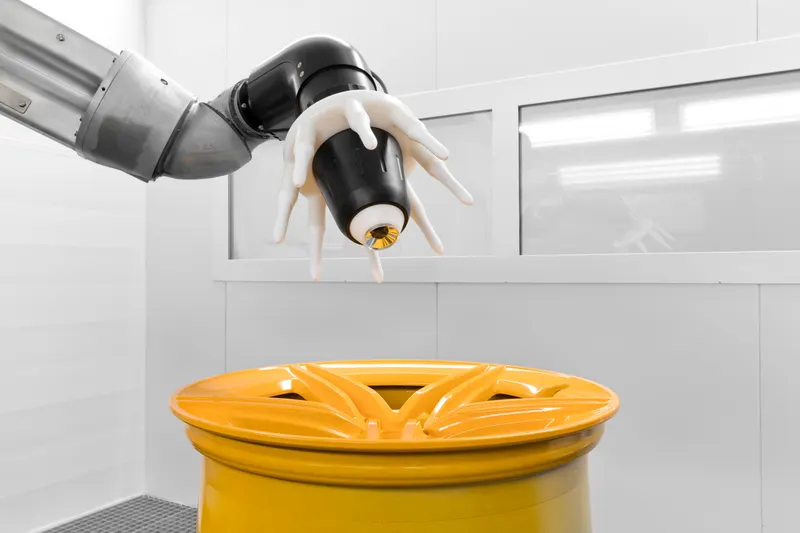
A robot doesn't sleep badly, didn't argue at home in the morning and its mind isn't elsewhere on Friday afternoon. It repeats the path it has learned on the first part in the morning exactly as on the last one in the evening. According to the manufacturer, this removes the part-to-part differences that are common with manual application.
A robot doesn't get sick and doesn't go on holiday. It can paint even when the booth would otherwise stand still – on a second shift, at night, when people are missing. But someone still loads the parts and someone still supervises the workstation. A robot doesn't put your painter out of a job, it takes over his most monotonous work.
You don't need a robot programmer
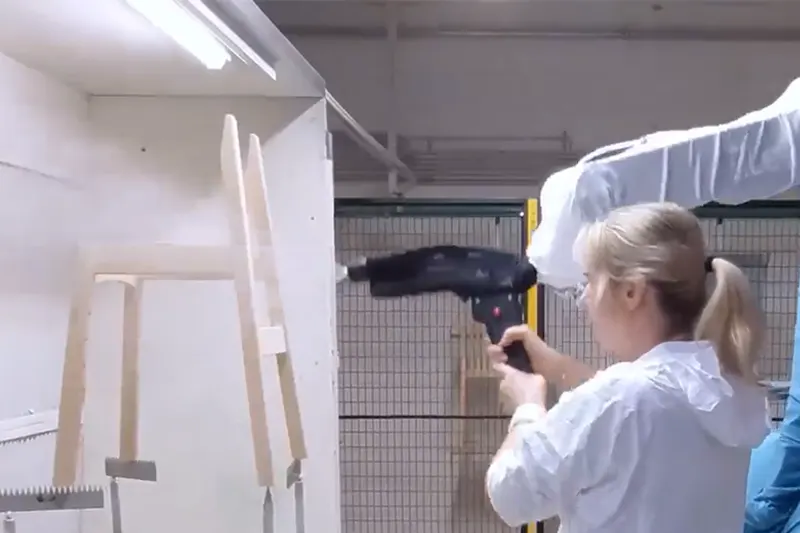
This is the biggest change. Not long ago, a robot meant a programmer, weeks of ramp-up and complex software. LESTA robots with self-teaching learn differently: your painter performs a work cycle once with the robot arm, and the robot records every movement. Then it repeats it, cycle after cycle. According to LESTA, no code needs to be written.
During teaching, the arm moves almost as easily as a hand-held spray gun. A new part simply means demonstrating a new cycle. We explain how it works in detail in the article Robotic painting without a programmer.
With a conventional industrial robot, it's different. A specialist programs the paths for each part – right at the robot or on a computer – and every new product means more hours of programming. With a self-teaching robot, this cost largely disappears, which is why robotic painting makes sense even for smaller paint shops and frequent part changes.
And most importantly: the robot learns from your best painter. The experience he has built up over the years isn't lost when he gets sick, goes on holiday or retires. It stays in the robot, and the robot repeats it every day.
All you need is LESTA, WAGNER and TECHNIKUM
- LESTA – a self-teaching robot that learns the path from the painter.
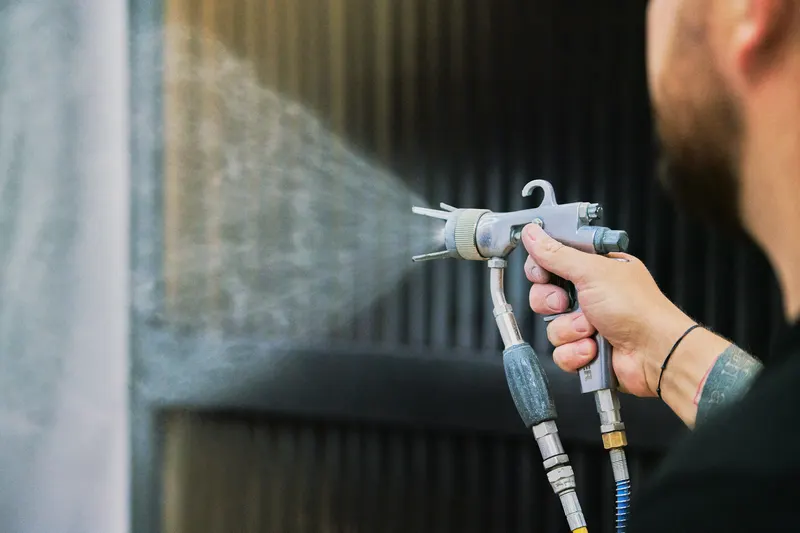
- WAGNER – the spray equipment: the gun on the robot arm, the pump and the material supply. The same equipment you know from manual painting.
- TECHNIKUM – we design the workstation, deliver the robot, install it, train your operators and provide service.
The rest you can handle yourself – whether you're the owner or the painter.
It's worth thinking about
A robot isn't for everyone. But if you paint every day, and if staff absences or inconsistent quality are a headache, it's worth at least working out the numbers.
Write down which parts you paint, in what batch sizes and with what material, and get in touch. We'll go through it together and you can decide whether it makes sense for you. Before deciding, you can also test your own parts through our Demonstrations and sample tests service. You'll find more about robots in the Robotic painting area.
Is this an issue in your plant?
Tell us what you need – the technician for your area will get back to you.
Your technician
Patrik Pocisk
Sales and Marketing Director
- Phone – Patrik Pocisk: +421 905 855 000
- E-mail – Patrik Pocisk: pocisk@
technikum.sk - Patrik on LinkedIn
- Speaks: English, Slovak, Czech
Do you have a question on this topic?The AI adviser answers immediately
Your technician
Patrik Pocisk
Sales and Marketing Director
- Phone – Patrik Pocisk: +421 905 855 000
- E-mail – Patrik Pocisk: pocisk@
technikum.sk - Patrik on LinkedIn
- Speaks: English, Slovak, Czech
Frequently asked questions
Do I need a programmer for a LESTA robot?
Not with LESTA robots that use self-teaching. The painter performs a work cycle once with the robot arm, the robot records the movement and then repeats it. According to LESTA, no code needs to be written.
Will a robot replace my painter?
Not completely. A robot repeats the path an experienced painter taught it, and it can also paint on a second shift or at night. But someone still loads the parts and someone still supervises the workstation. The robot takes over the painter's most monotonous work and keeps his experience in the company.
How do I find out whether a robot pays off for me?
Work out the cost of manual painting over five years – wages with contributions, downtime, repaints, complaints and overspray – and compare it with the investment in a robotic workstation. Contact TECHNIKUM with details of your parts, batch sizes and materials, and we'll go through it together.
Have a different question? Write to us – a technician will answer. Send an enquiry
Technical terms are explained in the glossary.